


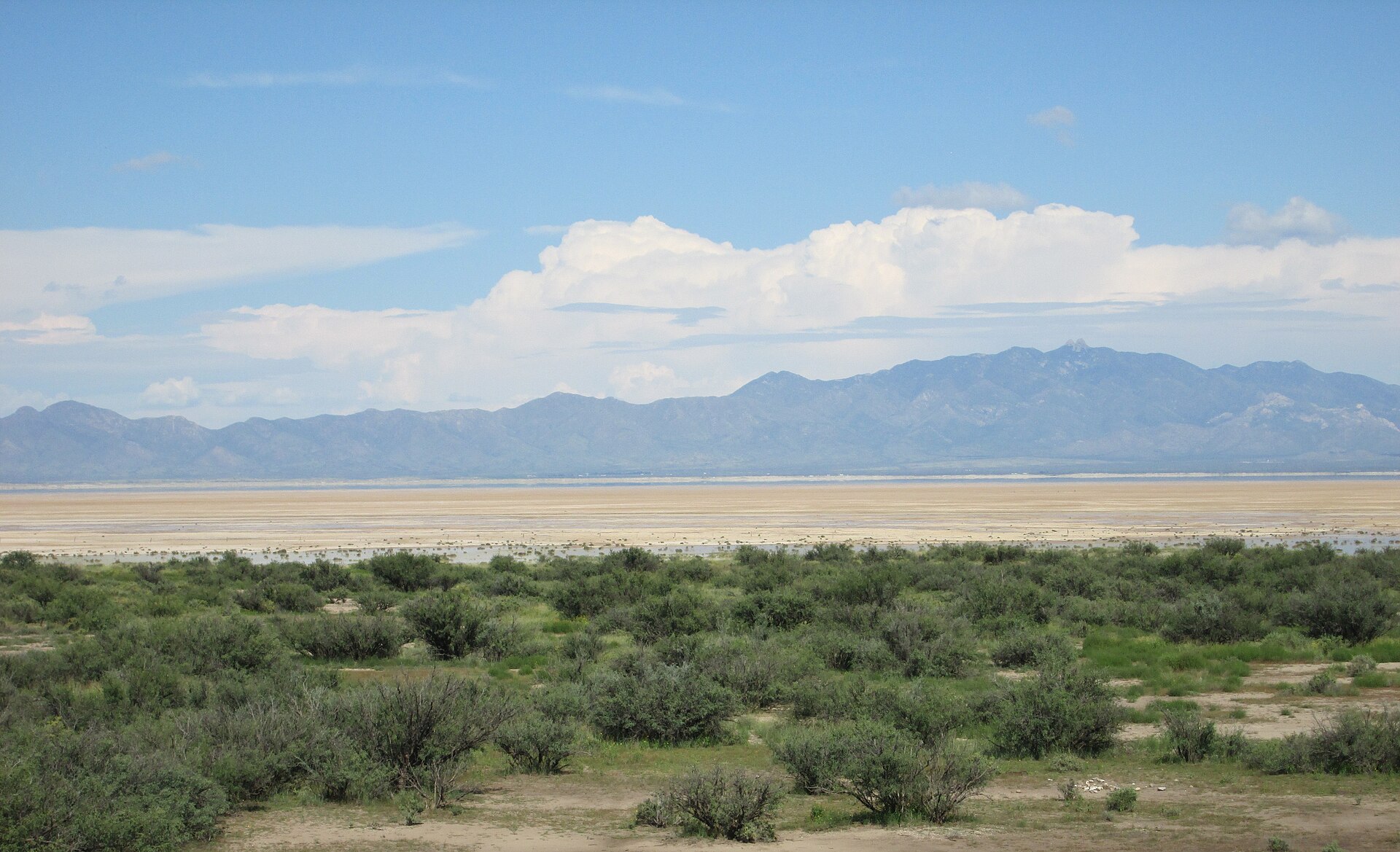


The SpaceX data center campus proposed for Cochise County, Arizona, would be one of the largest single electricity loads ever requested in the United States. The application, filed by SpaceX affiliate Tombstone Resources LLC, describes nine buildings on 747 acres near the Willcox Playa, up to 6 GW of power at full build-out and a 24 GWh battery system, according to county documents summarised by Baxtel. The county Planning and Zoning Commission holds a public hearing on 9 December in Bisbee.
SpaceX has put about $50 billion on the SpaceX data center campus. The power numbers matter more than the investment figure, because they decide whether the local co-ops, the regional grid and the neighbouring power plant can serve it, and who pays.
What the SpaceX data center filing says
The SpaceX data center would be built in four phases of about 1.5 GW each, starting with roughly 1,500 MW. Each building would be about 493,000 square feet. The company says it will use dry cooling, relying on air rather than groundwater, and the application estimates about 1,000 permanent jobs. A SpaceX project page cited by Drive Tesla Canada lists up to 6 GW and a 24 GWh battery system, without naming a battery supplier.
The application proposes that the applicant fund about $3.6 billion of grid upgrades, according to FourWeekMBA, which reviewed the filing. The site is next to the Apache Generating Station of the Arizona Electric Power Cooperative (AEPCO).
Where the SpaceX data center figures conflict
Several key numbers differ between sources, and a reader should not average them.
- Apache Generating Station size. DatacenterDynamics, citing the county planning department, puts it at 626 MW from coal, gas and solar. Other reports describe about 1 GW of coal and gas capacity that had been due to retire by 2028, which SpaceX told residents could grow to more than 6 GW. The first figure comes from a planning document; the second from accounts of a town hall.
- On-site gas. Interesting Engineering reports a separate public filing describing a proposed 750 MW gas-fired plant alongside the campus, still a proposal. Tecknexus, summarising the power model, lists 90 MW of gas backup. SpaceX said it would deliver electricity cost savings to local co-op members, but did not say whether gas is part of the plan.
- Jobs. The application estimates about 1,000 permanent jobs; other reports cite 6,500, which likely includes construction.
Until the county or the co-ops publish a single interconnection plan, the safest reading is that the SpaceX data center would rely on the regional grid through local co-ops, with batteries and some gas for backup.
How much electricity 6 GW means
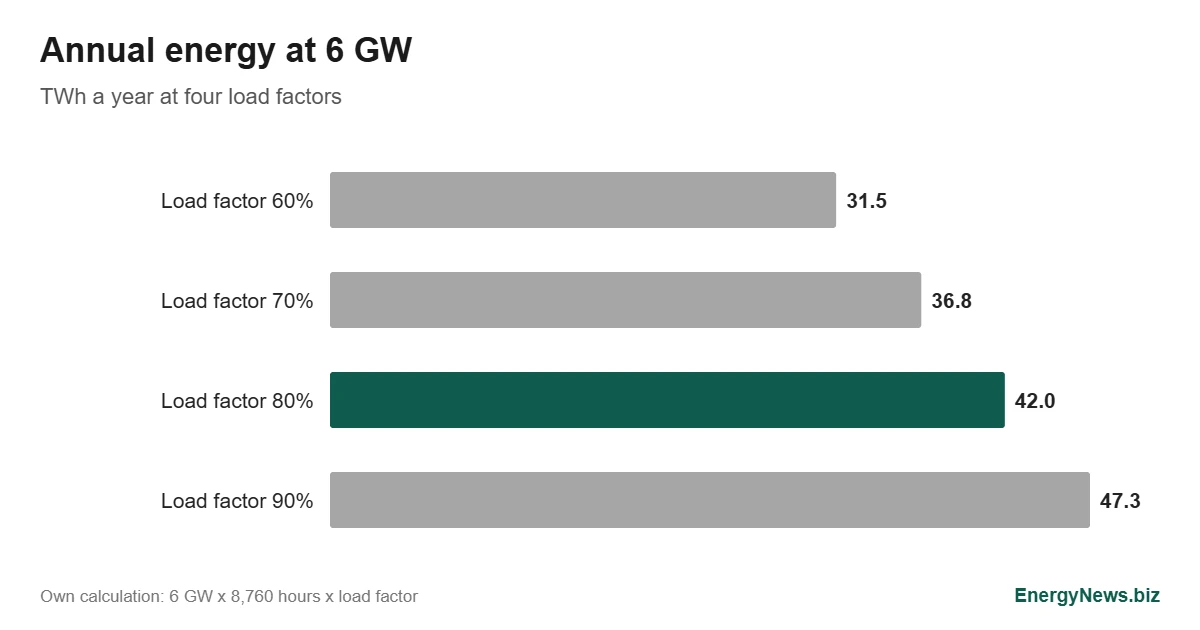
A data center rarely runs at nameplate all year. The filing does not give a load factor, so the table below uses four. At 80%, a common planning value for AI training campuses, 6 GW consumes about 42 TWh a year.
| Metric | Value | Method |
|---|---|---|
| Annual energy, 80% load | 42.0 TWh | 6 GW x 8,760 h x 0.8 |
| Annual energy, phase one at 80% | 10.5 TWh | 1.5 GW x 8,760 h x 0.8 |
| Battery cover at full load | 4 hours | 24 GWh / 6 GW |
| Applicant-funded grid work per MW | about $600,000 | $3.6 bn / 6,000 MW |
| Investment per MW of load | about $8.3 million | $50 bn / 6,000 MW |
| Power bill at $60 per MWh, 80% load | about $2.5 bn a year | 42 TWh x $60 |
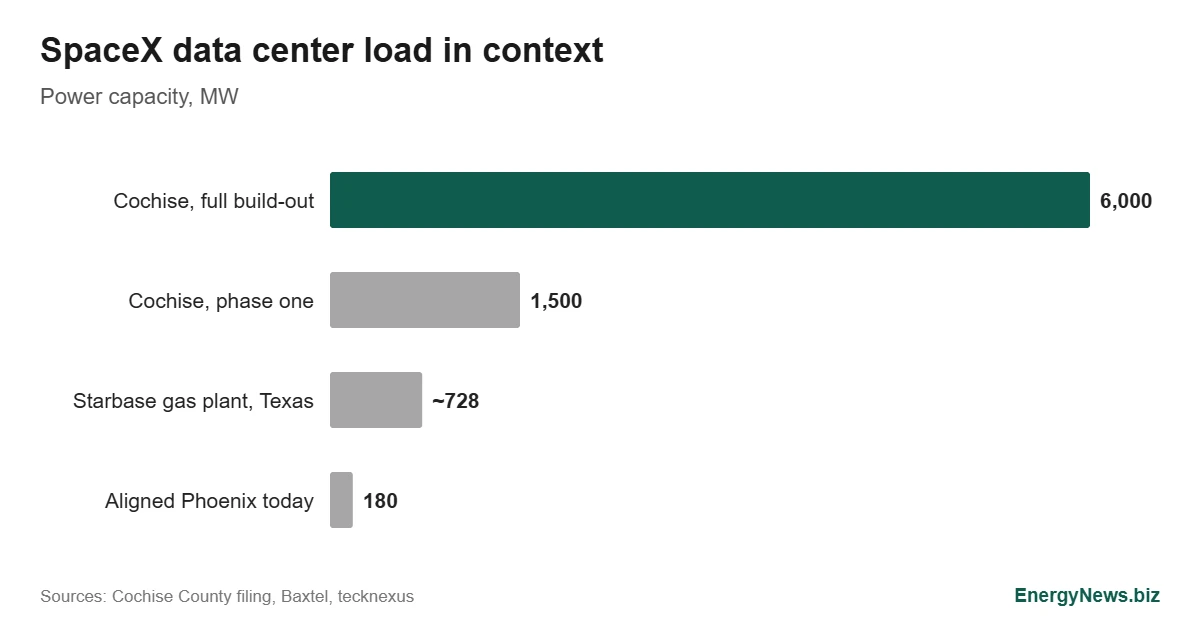
For scale, the largest data center site in Arizona today, before any SpaceX data center,, Aligned Phoenix, has 180 MW, according to Baxtel. The Cochise campus asks for 33 times that. Even phase one alone, at 1.5 GW, would be larger than any existing data center in the state.
What the 24 GWh of batteries can and cannot do
Twenty-four GWh is a very large battery by any standard. It would cover the full 6 GW SpaceX data center for four hours, or a 1.5 GW phase for 16 hours. That is enough to ride through evening peaks, shift solar output from midday into the night and give the grid operator a flexible resource during heat waves.
It is not enough to run the SpaceX data center through a multi-day grid outage. For that, the campus would need on-site generation or firm supply from the grid. This is where the gas questions matter. A 750 MW gas plant would cover about one eighth of full load; a 90 MW backup only critical systems.
The battery also changes how the SpaceX data center looks to the grid. A data center that can shift part of its draw away from peak hours can be connected faster, because utilities can plan around it. Several US utilities now offer faster interconnection to large loads that accept curtailment. If SpaceX uses its battery this way, it could reduce the grid upgrades needed per MW.
Who pays for the grid
The $3.6 billion of applicant-funded grid work is the clearest signal in the filing. At about $600,000 per MW, it is in the range of large transmission projects, and it shifts the main cost of new lines and substations away from co-op members. That answers one of the biggest public concerns about data centers: that ordinary customers fund the grid built for them.
It does not settle everything. Co-op members will want to know who carries the risk if the SpaceX data center is built in phases and the later phases never come. Transmission sized for 6 GW but used for 1.5 GW is expensive. Contracts with minimum demand charges or exit fees are the usual protection. Debates over who pays for grid growth are not limited to the US, as Spain’s grid plan, with data centres taking a large share of new capacity, shows.
SpaceX’s other campus at Starbase, Texas, follows the opposite model: an off-grid gas plant of about 708 to 748 MW, according to tecknexus. The two projects together will show which approach gets built faster.
What the SpaceX data center means for the Southwest grid
The Southwest already faces rising peak demand from population growth, air conditioning and new factories. Utilities in Arizona have filed plans for large additions of solar, storage and gas over the next decade. A single SpaceX data center of 6 GW would add a load in the same range as a large share of those plans, concentrated at one rural node rather than spread across cities.
That concentration is both a problem and an opportunity. A remote node needs new high-voltage lines, which take years to permit. But a single large customer willing to fund lines, add a battery of 24 GWh and accept some flexibility can also pay for capacity that later serves solar plants in the same area. The outcome depends on how the interconnection agreements are written: whether the new lines are sized only for the campus or for the wider region.
Gas suppliers are watching as well. If the co-ops cannot secure enough firm supply, the proposed gas plant next to the campus would need pipeline capacity in a region where gas already sets evening prices.
What the 9 December hearing decides
- Whether the county approves the special use for the SpaceX data center site, the first hard gate for the project.
- Conditions on water, noise, lighting and traffic, which could add cost.
- Any requirement to disclose the gas generation plan.
- The phasing schedule, which will decide when the first 1.5 GW needs firm power.
The number to watch
The number to watch is 1,500 MW, the size of phase one. It alone would be eight times Arizona’s largest data center today. If the co-ops and AEPCO can sign firm supply for that first phase in 2027, the 6 GW plan becomes credible. If they cannot, expect the on-site gas plant to move from proposal to permit application.
Add EnergyNews.biz as a preferred source on Google


