




BASF Battery Materials will focus its portfolio exclusively on cathode active materials (CAM), the German chemical group announced on 23 November 2026. As part of the move, BASF has agreed to sell its battery recycling business to cylib, and it is looking for partners for two mothballed production sites in the United States and Finland.
The company said cathode active materials offer the strongest potential for customer value, differentiation and profitable development. The step follows a strategic recalibration that began in 2024, when conditions in the global electric vehicle and battery markets changed. Since then, BASF Battery Materials has adjusted its investment plans, cut costs and capital spending, and secured long-term customer agreements.
What BASF Battery Materials sells to cylib
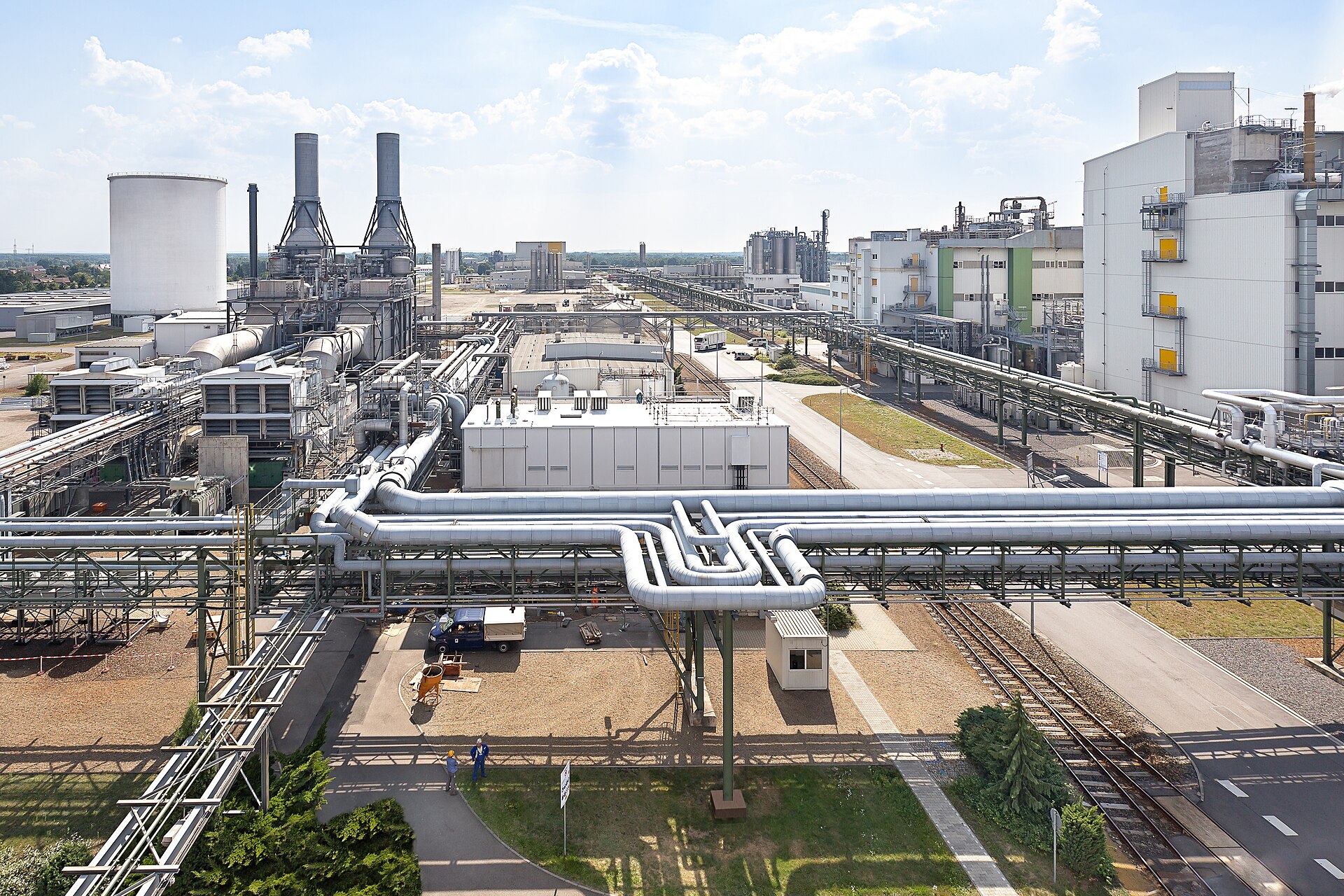
BASF and cylib signed the agreement on 20 November 2026. The deal covers BASF’s battery recycling activities in Europe and North America, including intellectual property, customer contracts and partner relationships. It also includes the black mass production plant and the battery recycling prototype plant in Schwarzheide, Germany. Existing customer and partner relationships remain in place, and BASF will run the business until the transaction closes.
Closing is expected between the second and third quarter of 2027, subject to regulatory approval and customary conditions. The financial terms were not disclosed.
“Recycling is cylib’s core business,” said Dr. Gideon Schwich, co-CEO and co-founder of cylib. He said Schwarzheide adds another European site where end-of-life batteries are processed into black mass, the intermediate that contains lithium, nickel, cobalt and manganese, and that the aim is to recover those critical raw materials and strengthen Europe’s security of supply.
Dr. Daniel Schönfelder, President of BASF’s Battery Materials division, said the recycling team had built competitive capabilities, industrial assets and valuable relationships, and that cylib’s specialised technology and growing scale give the business a strong platform.
Three sites, three outcomes
The announcement touches three named locations. In Schwarzheide, the recycling assets move to cylib, while BASF Battery Materials keeps its cathode plant there. In Battle Creek, Michigan, BASF is pursuing strategic options for a production site that is currently mothballed. In Harjavalta, Finland, the same applies to the precursor cathode active materials (PCAM) plant, also mothballed. For both, BASF is seeking partners who can build on the existing assets.
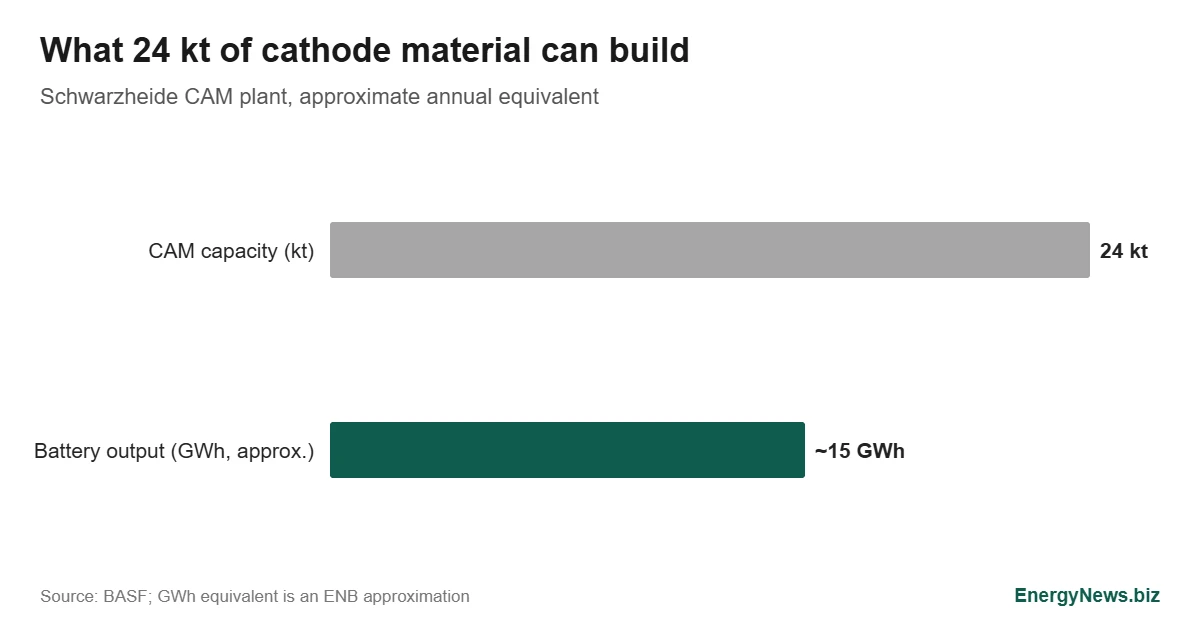
An ENB calculation puts the retained Schwarzheide cathode capacity in battery terms. BASF gives the plant a capacity of 24 kt of cathode material a year. Assuming roughly 1.6 kg of cathode material per kWh, a common figure for nickel-rich chemistries, that supports about 15 GWh of battery cells a year, or around 250,000 electric cars at 60 kWh each. The exact figure depends on chemistry and pack size, but it shows the scale of what BASF keeps in Europe.
Why BASF Battery Materials is narrowing its focus
“BASF Battery Materials operates in an attractive long-term growth market that is also characterized by significant market and technology risks,” said Anup Kothari, member of the Board of Executive Directors of BASF SE. He tied the step to the group’s “Winning Ways” strategy, which aims to let standalone businesses compete in their own markets.
The risks are visible across the sector. European cathode and cell projects have been delayed or cancelled as electric vehicle demand grew more slowly than planned and Chinese suppliers cut prices. At the same time, lithium iron phosphate cells, which do not use nickel-based cathodes, have taken a growing share of storage and lower-cost vehicles, as in the US-made LFP deal for energy storage. Nickel-based cathodes, BASF’s focus, remain strongest in longer-range vehicles where energy density matters most.
Schönfelder said cathode materials are a key differentiator for battery performance, safety, cost and sustainability, and that BASF will build on its global production and research footprint and its expertise in nickel-based CAM.
What it means for recycling in Europe
For cylib, the deal adds industrial capacity in a market that is set to grow as the first large wave of electric vehicle batteries reaches end of life and as EU rules requiring recycled content in new batteries draw closer. Specialised recyclers are consolidating sites to gain scale, while chemical groups such as BASF concentrate on the materials they make best. Demand for storage keeps rising too, with the US alone passing 200 GWh of installed batteries.
The next milestones for BASF Battery Materials are regulatory approval of the cylib transaction and any partner agreements for Battle Creek and Harjavalta. The full release is published by BASF, and company details are available from cylib.
Add EnergyNews.biz as a preferred source on Google


