


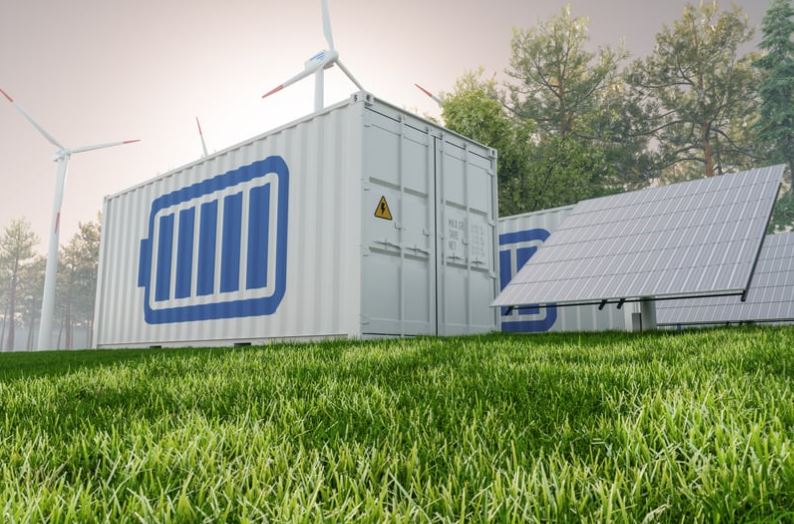


Copenhagen Infrastructure Partners (CIP) is advancing a 300 megawatt battery energy storage system with 1,500 megawatt hours of capacity at its Patache project in Chile.
CIP confirmed the issuance of Final Notice to Proceed through its Growth Markets Fund II, marking the transition from development to construction under fully executed supply and engineering contracts. The milestone reflects a broader trend in Chile’s power market, where storage projects are moving toward execution as revenue models tied to arbitrage and grid services become more defined.
The Patache project’s 1,500 megawatt hour capacity implies a five hour duration system, positioning it to capture excess solar generation during peak irradiance periods and dispatch electricity into evening demand peaks. This duration aligns with Chile’s characteristic solar production curve, particularly in the northern regions where solar output is among the highest globally but poorly synchronized with consumption patterns.
The project’s location near existing transmission infrastructure and industrial clusters addresses a structural constraint in Chile’s energy system. Transmission bottlenecks in the north have led to periodic oversupply conditions, forcing solar generators to curtail output despite strong resource availability. By colocating storage with generation and demand nodes, Patache is designed to reduce these inefficiencies while improving grid stability.
From a system perspective, the role of storage in Chile is evolving beyond simple energy shifting. Battery assets are increasingly expected to provide ancillary services such as frequency regulation and ramping support, functions traditionally managed by thermal generation. The ability of a 300 megawatt system to displace peaking fossil generation depends not only on capacity but also on response time and integration with grid operator dispatch protocols.
CIP’s investment builds on its earlier Arena BESS project, a 220 megawatt and 1,100 megawatt hour installation in the Antofagasta region. That project has already entered operation, offering a reference point for performance expectations and revenue realization in Chile’s storage market. However, scaling from Arena to Patache introduces additional exposure to evolving market mechanisms, particularly as storage penetration increases and price spreads narrow.
Financing structures for battery projects remain closely tied to assumptions about future electricity price volatility. In markets with high renewable penetration, arbitrage opportunities can be significant but also unstable, influenced by policy changes, grid upgrades, and competing storage capacity. The involvement of co investors alongside CIP suggests a risk sharing approach, typical for large scale storage projects in emerging markets where long term revenue certainty is still developing.
The Patache project has also qualified for an international carbon offset program, linking its operational profile to emissions reduction claims. While storage does not generate electricity directly, its ability to displace thermal generation during peak periods forms the basis of these claims. The credibility of such offsets depends on baseline assumptions about which generation sources are avoided, an area that remains under scrutiny in carbon accounting methodologies.
Chile’s policy framework has increasingly recognized storage as a critical enabler of renewable integration, but regulatory clarity around remuneration for grid services continues to evolve. Projects like Patache are therefore not only infrastructure investments but also test cases for how storage assets will be valued within the national electricity market.
Add EnergyNews.biz as a preferred source on Google


