


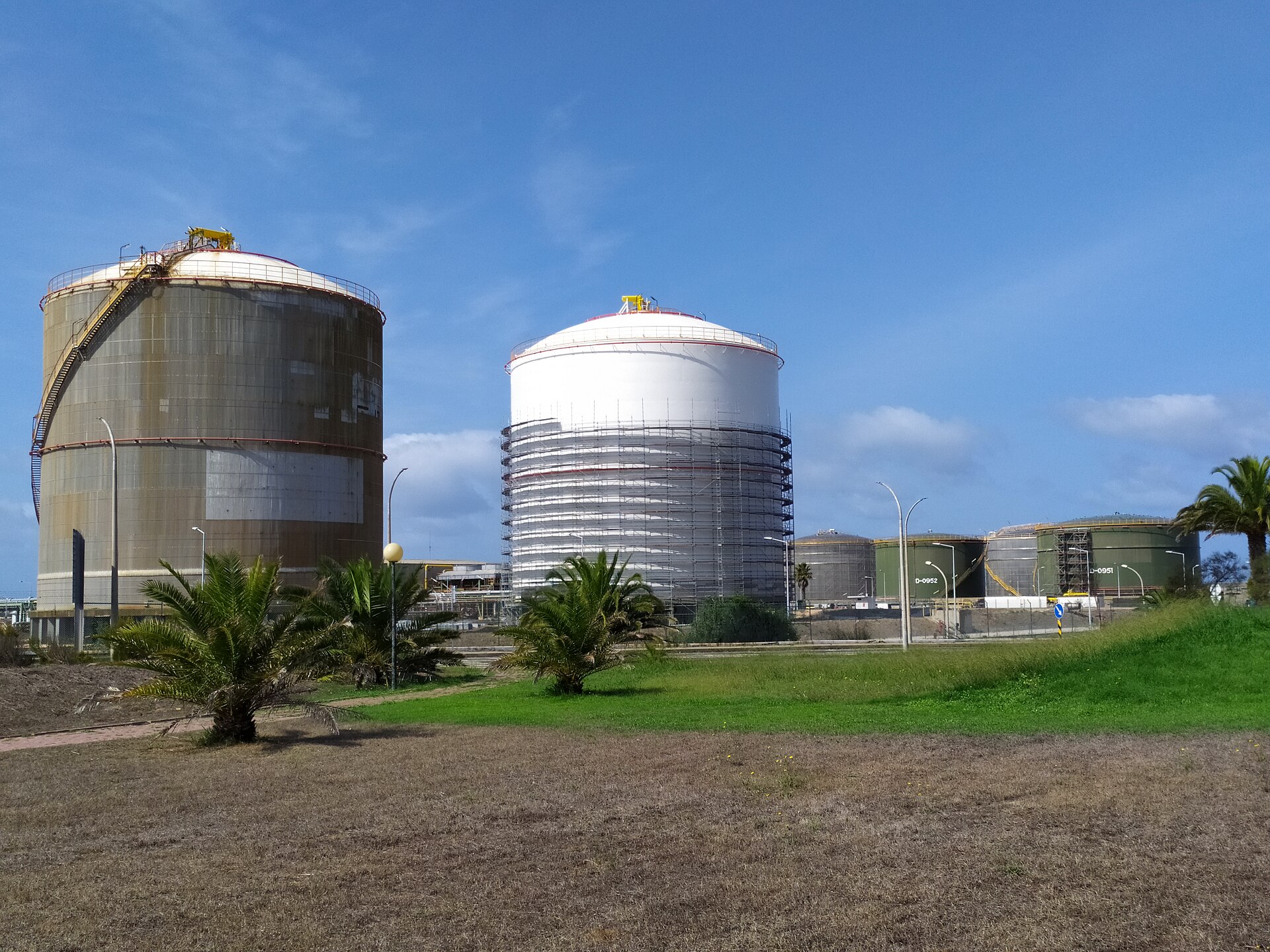


Iberdrola has scrapped its Green Ammonia Express project in Sines, Portugal, after a review of its investment priorities, the company told Reuters on 26 November. The €427 million plant would have used 137 MW of electrolysers to make about 95,000 tonnes of green ammonia a year. It had national interest status but was still at a preliminary stage, according to Reuters reporting.
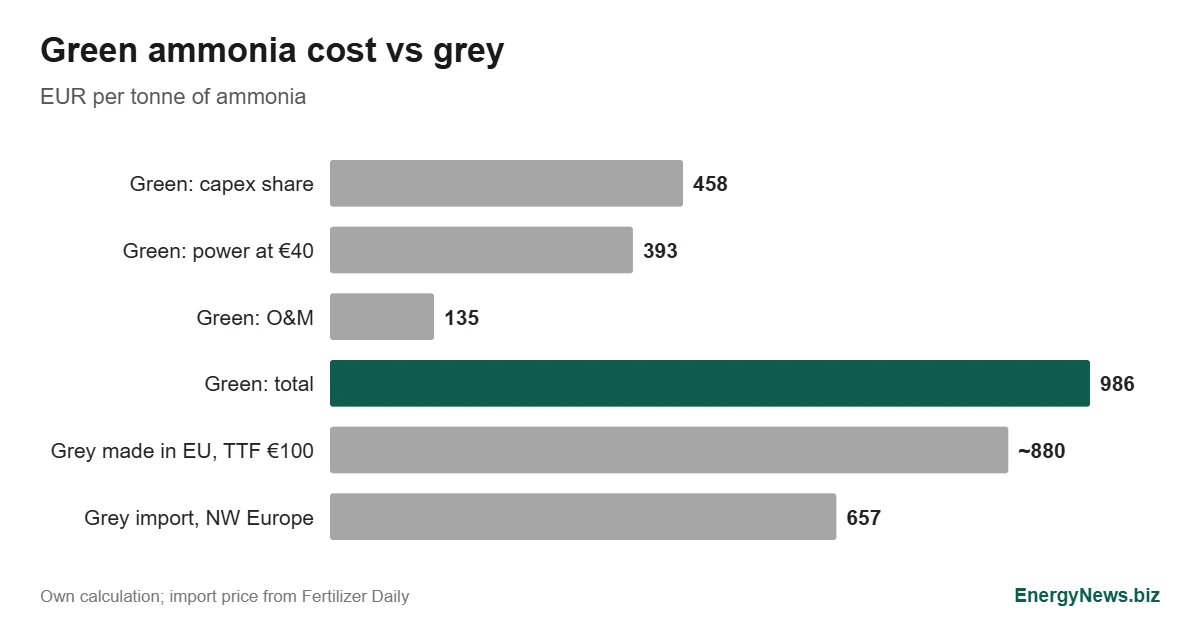
The reasons given are weak demand and high costs in low-carbon ammonia. A cost stack built from the project’s own figures shows how large the gap is: green ammonia from Sines would cost roughly €990 a tonne, against about €657 for grey ammonia delivered to Northwest Europe in early November.
What the green ammonia plant would have been
Green Ammonia Express was announced in 2024. Reports describe 137 MW of electrolysis, about 95,000 tonnes of ammonia a year and a 220 MW renewable power park. According to Portuguese reporting cited by Reuters partners, no environmental impact assessment had been started before the deadline. Iberdrola said the plant “was part of its green hydrogen project portfolio” and that it decided not to proceed.
The cancellation follows other retreats. RWE withdrew from Namibia’s $10 billion Hyphen green ammonia project in September 2025, citing slower than expected European demand for hydrogen and ammonia. In China, by contrast, large projects keep moving with state support, as in the Songyuan green hydrogen park, which already makes green ammonia.
A cost stack for Sines green ammonia
The calculation uses the published capital cost and capacity, plus stated assumptions for everything else.
- Capital. €427 million, repaid over 20 years at an 8% cost of capital. The annual charge is about €43.5 million, or €458 per tonne of ammonia.
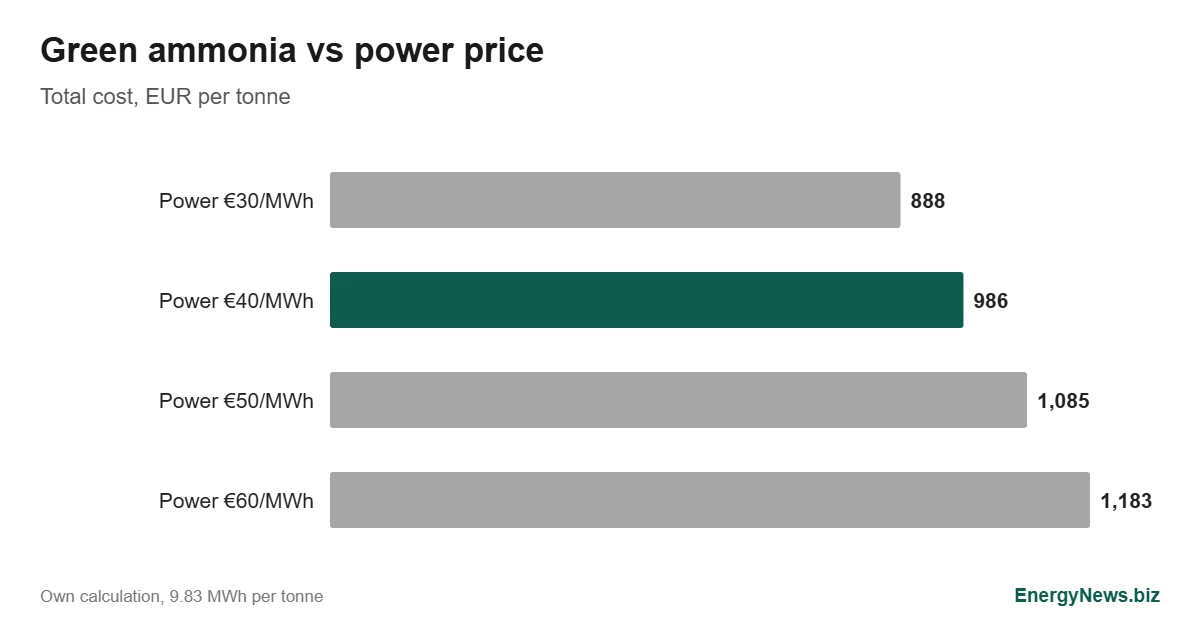
- Electricity. 95,000 tonnes of ammonia contain about 16,900 tonnes of hydrogen (17.8% by mass). At 52 kWh per kg for electrolysis, that needs 877 GWh. Air separation and synthesis add about 0.6 MWh per tonne, or 57 GWh. Total: about 934 GWh, or 9.83 MWh per tonne. At €40 per MWh, that is €393 per tonne.
- Operation and maintenance. 3% of capital a year, about €12.8 million, or €135 per tonne.
The total is about €986 per tonne. The assumptions are deliberately moderate: no stack replacement, no water treatment cost, no storage of hydrogen to cover gaps in renewable supply.
| Item | Value | Note |
|---|---|---|
| Capex per MW of electrolysis | €3.12 million | €427m / 137 MW, whole plant |
| Capex per annual tonne | €4,490 | €427m / 95,000 t |
| Electricity need | 934 GWh a year | 9.83 MWh per tonne |
| Electrolyser full-load hours | about 6,400 | 877 GWh / 137 MW |
| Green ammonia cost at €40/MWh | €986 per tonne | capex + power + O&M |
| Grey import price, NW Europe | €657 per tonne | $710 to $730 CFR, early November |
One number exposes a design risk. Making 95,000 tonnes needs the electrolysers to run about 6,400 hours a year, a load factor of 73%. A 220 MW solar and wind park in southern Portugal would deliver far less energy than 934 GWh, so the plant would have needed grid power under a contract that meets EU rules for renewable hydrogen, or a lower output. Lower output raises the capital cost per tonne.
The green ammonia gap in euros
Northwest European grey ammonia traded at $710 to $730 per tonne CFR in early November, according to Fertilizer Daily. At $720 and the exchange rate Reuters used, that is about €657. Against the Sines cost of €986, the gap is about €330 per tonne, or €31 million a year for the full plant output.
That is the premium a buyer, a subsidy or a carbon price would have to cover every year for 20 years. The EU ETS adds little for now: Argus estimates average ETS costs for Northwest European ammonia producers at about $27 per tonne, and CBAM charges on imports at roughly $50 to $70 per tonne. Even the higher CBAM figure closes only a fifth of the gap.
The surprise: European grey is almost as expensive
The comparison changes when the benchmark is ammonia made in Europe, not imported. The Dutch TTF gas price rose above €100 per MWh on 28 October for the first time since December 2022. A modern plant uses about 8.5 MWh of gas per tonne of ammonia as feedstock and fuel. At €100 per MWh, gas alone costs about €850 per tonne, before ETS costs and plant overheads, which puts EU-made grey near €880 or more.
At those gas prices, green ammonia at €986 is only about 12% more expensive than grey ammonia made in Europe. It is still 50% more expensive than imports. This is why European ammonia plants curtail output in gas price spikes and buyers switch to imports, rather than to green supply. A green plant in Iberia competes with cargoes from the Middle East, the US and Trinidad, not with Dutch or German plants.
What would have made Sines work
- Cheaper power. At €30 per MWh, the cost falls to about €888 per tonne. Iberian solar can deliver that at midday, but not for 6,400 hours a year.
- Lower capital cost. Cutting capex by 30% would save about €137 per tonne.
- A firm buyer. A long-term contract at €900 or more per tonne from a fertiliser maker, shipping fuel buyer or trader would cover most of the gap.
- Grant support. EU Hydrogen Bank auctions pay a fixed premium per kg of hydrogen for ten years. At €0.50 per kg, the support is worth about €89 per tonne of ammonia, a quarter of the gap.
What other green ammonia developers should take from it
Developers in Iberia, North Africa and the Middle East should test their projects against imported grey ammonia, not European grey production costs. They should also check how many full-load hours their power supply can deliver under EU rules, since that decides the capital cost per tonne. Buyers in Europe face the reverse question: whether to sign long-term green contracts while European gas stays above €80 to €100 per MWh, or wait for cheaper electrolysers and risk paying more for carbon later.
For Portugal, the loss is one project in a pipeline that still includes larger Sines plans. For Iberdrola, it fits a wider pattern of utilities focusing capital on grids and renewables, where returns are regulated or contracted.
Where green ammonia demand could come from
The demand side explains why no buyer signed. Fertiliser makers can switch to imports when gas spikes, so they rarely commit to a fixed price for 20 years. Shipping lines that plan ammonia engines wait for the first commercial engines and for global fuel rules. Power utilities in Japan and Korea that test ammonia co-firing buy on government-backed contracts in Asia, not from Iberia. Until one of these groups signs long-term contracts at prices near €900 per tonne, green ammonia plants in Europe will struggle to reach a final investment decision.
The number to watch
The number to watch is €330 per tonne, the gap between green ammonia from a plant like Sines and grey imports into Northwest Europe. If CBAM costs, EU mandates or long-term offtake contracts close that gap, projects come back. If European gas falls back below €40 per MWh, the gap widens and more cancellations follow.
Add EnergyNews.biz as a preferred source on Google


