




India green hydrogen projects could draw $180 to 200 billion of investment through 2030, according to a report from CARE ESG Ratings, quoted as CareEdge ESG, released on 27 October 2026. The same report lists four obstacles: high production costs, limited commissioned capacity, infrastructure gaps and changing international certification rules.
India green hydrogen cost against grey hydrogen
CareEdge puts the current cost of green hydrogen in India at about Rs 350 to 450 per kilogram, against Rs 160 to 200 for conventional grey hydrogen. That is more than double at both ends of the range. The report sees green hydrogen falling to around $2.4 per kilogram by 2030 as renewable power gets cheaper, electrolyser costs drop and projects scale up. Until then, adoption depends partly on policy support, carbon pricing and assured industrial demand.
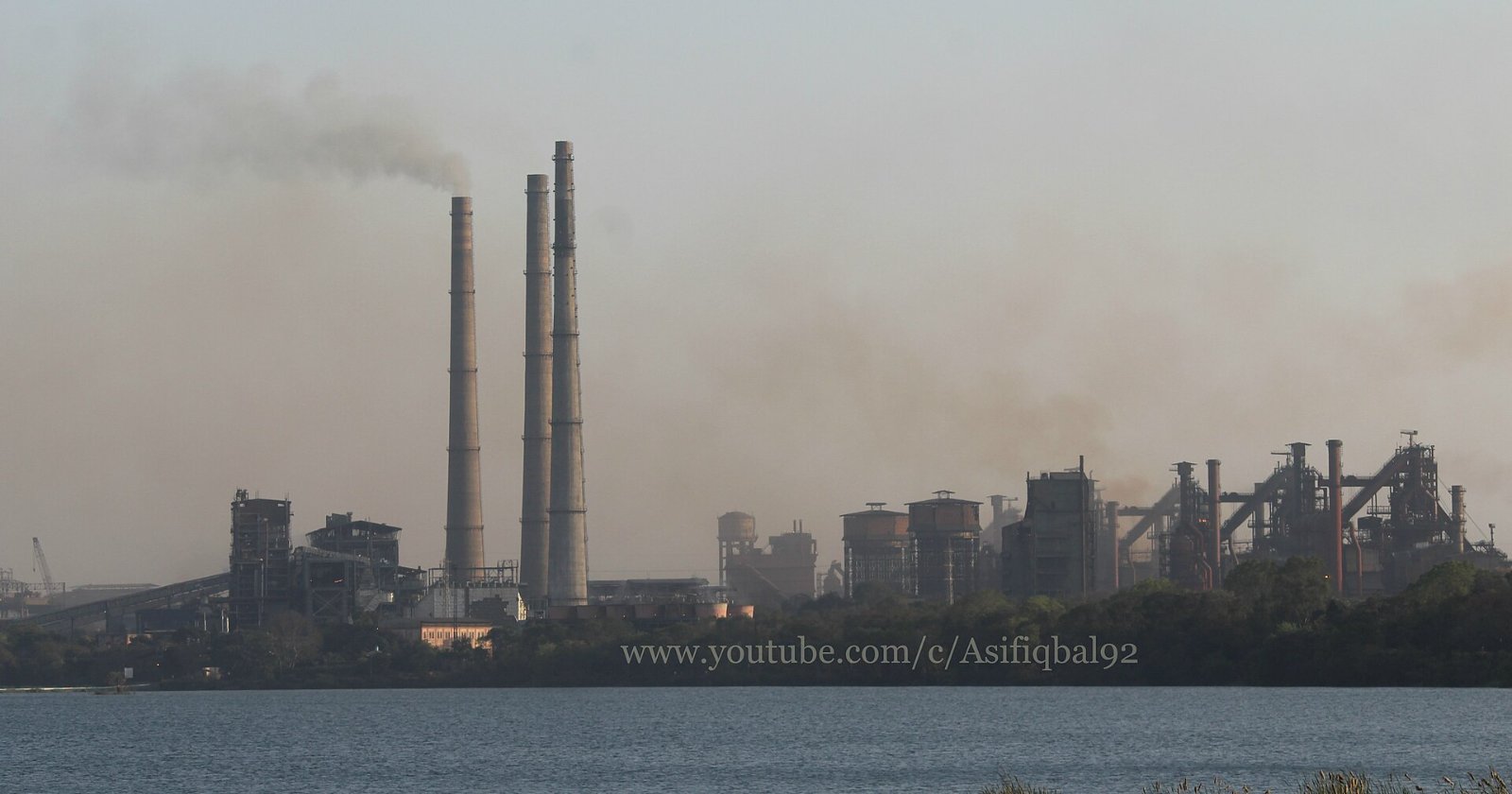
The demand side is concentrated in sectors that already buy hydrogen or need a substitute for fossil inputs. India consumes about 17 to 19 million tonnes of ammonia a year, mostly made from natural gas, and the report names steel, fertilisers, refining and chemicals as the sectors that could benefit from India green hydrogen.
The EU carbon border price for Indian steel
The report also links green hydrogen to export competitiveness. Indian steel exporters could face estimated costs of $70 to 190 per tonne on shipments to the European Union under the Carbon Border Adjustment Mechanism, and more than $270 per tonne where default emissions values apply. For a producer in that position, India green hydrogen is both a decarbonisation route and a way to reduce a trade cost, which gives steelmakers a reason to sign offtake agreements that does not depend on domestic subsidy alone. Our earlier analysis of the EU emissions trading proposal shows how quickly such carbon costs can change.
A global pipeline that is mostly unbuilt
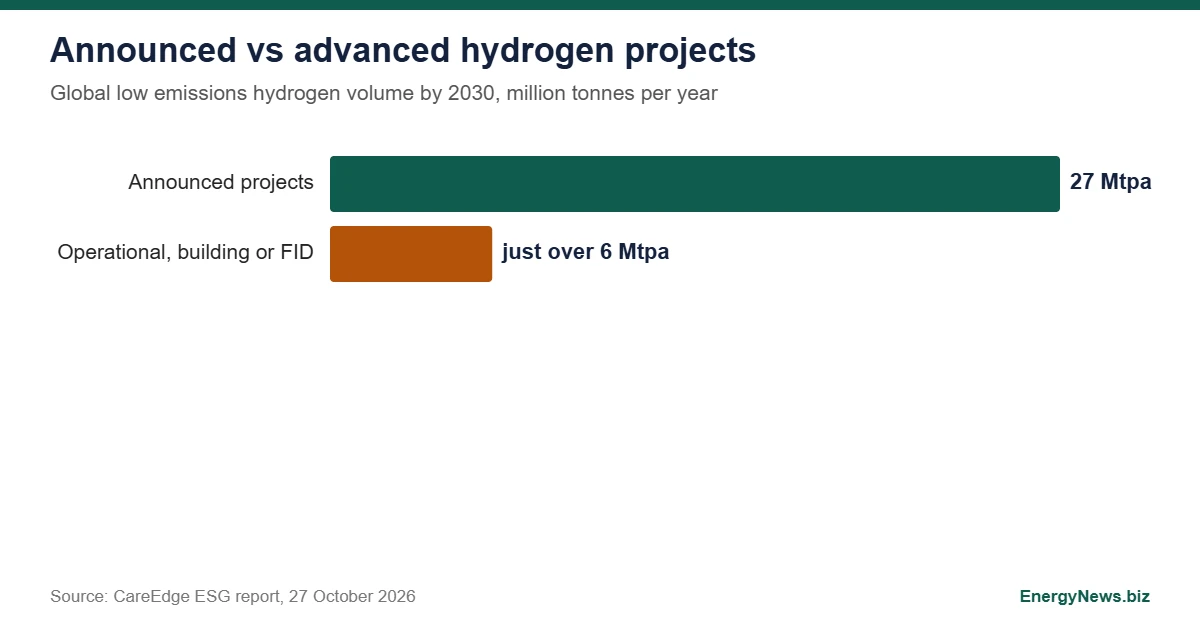
The report sets India in a global context. Announced low emissions hydrogen projects worldwide could deliver 27 million tonnes per annum by 2030, but projects that are operational, under construction or at final investment decision, or likely to commission, total only slightly above 6 million tonnes per annum. Less than a quarter of announced volume is therefore at an advanced stage, and the India green hydrogen pipeline is exposed to the same gap between announcement and delivery.
Nikunj Dube, Chief Ratings Officer at CareEdge ESG, said India’s green hydrogen goals must lead to commercially viable projects backed by reliable offtake agreements, competitive production costs and robust infrastructure. That points to the weak link. Investment ranges of $180 to 200 billion describe what the sector could absorb, not what lenders have committed, and lenders will want contracted buyers before they commit.
For India green hydrogen developers the practical agenda is therefore narrow: lock in offtake from steel, fertiliser and refining buyers, secure certification that will be accepted by export markets, and bring down the cost per kilogram toward the 2030 level the report expects. Readers should treat the figures as one rating agency’s estimate, available from CareEdge, and not as an official government projection.
Add EnergyNews.biz as a preferred source on Google


