


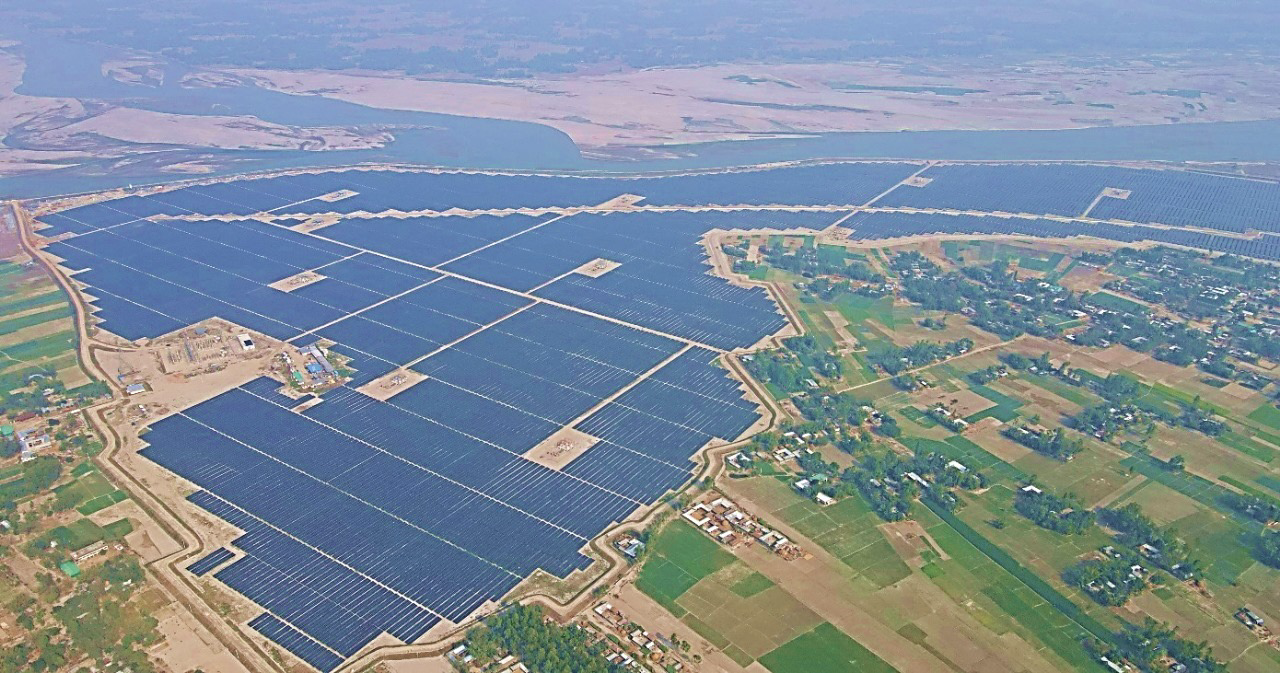


The ADB Bangladesh solar programme will develop six projects with more than 1 GW of combined capacity, the Asian Development Bank has announced. The bank aims to mobilise more than $1 billion of investment for the projects, mostly from private developers, using public tenders and risk-sharing support.
The first project is a 130 MW solar plant with 26 MWh of battery storage at Sonagazi in Feni district, on the country’s southeastern coast. A tender is planned for 2026. The remaining sites will follow in stages.
What the ADB Bangladesh solar programme adds
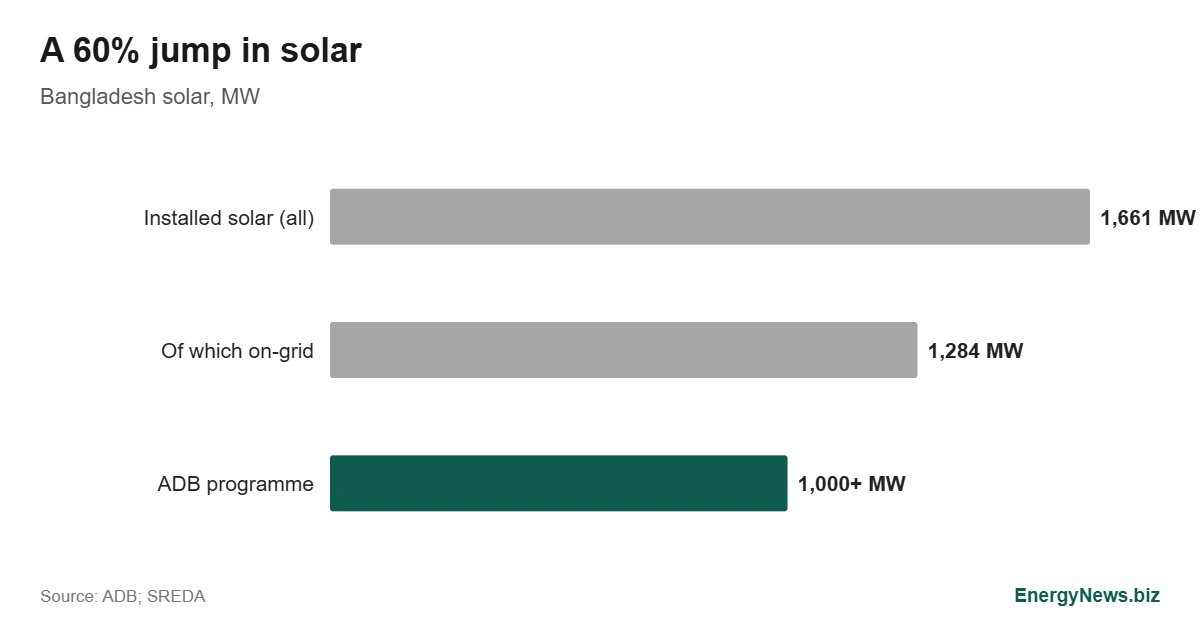
Bangladesh has about 1,661 MW of solar capacity installed, of which about 1,284 MW is connected to the grid, according to the Sustainable and Renewable Energy Development Authority. An ENB calculation shows the scale of the new plan: more than 1 GW would add about 60% to total installed solar, and close to 80% to grid-connected solar.
The battery at Sonagazi is modest in relation to the plant. At 26 MWh against 130 MW, it can deliver full plant output for about 12 minutes. That points to a role in smoothing output and supporting grid stability, rather than shifting large amounts of solar into the evening peak.
Why the ADB Bangladesh solar plan matters
Bangladesh has set targets of 20% of electricity from renewables by 2030 and 30% by 2040, and plans 5,500 MW of rooftop solar. Progress has been slow, as land is scarce in one of the world’s most densely populated countries and the grid has struggled to absorb new plants. Most electricity still comes from imported gas, oil and coal, which has exposed the country to fuel shortages and price spikes.
Tenders backed by a multilateral bank, as in the ADB Bangladesh solar model, can lower financing costs and give developers confidence that contracts will be honoured. That is often the deciding factor in emerging markets, where the cost of capital can double the price of a solar project compared with Europe. Policy design matters as well, as Australia’s free midday solar hours show in a mature market.
A changing power mix
The solar push comes as Bangladesh adds other low-carbon supply. The country received its first nuclear electricity this week from the Rooppur plant, whose progress was followed in the report on Rooppur nearing the grid. Together, nuclear and solar could reduce the country’s dependence on imported fuel over the next decade.
Land is the hardest constraint. Large solar plants need flat ground that in Bangladesh is usually farmland, and conversion of agricultural land is politically sensitive. Developers have turned to unused government land, char islands in rivers and coastal areas such as Feni, while the rooftop target aims to use space on factories and public buildings instead of fields.
Grid capacity is the second constraint. Several existing solar plants have faced curtailment or delayed connection because substations and lines were not ready. Pairing new plants with batteries, even small ones like Sonagazi’s, and planning transmission alongside generation are meant to avoid repeating those problems as the ADB Bangladesh solar projects come online.
The test for the ADB Bangladesh solar programme will be execution: securing land, finishing grid connections on time and attracting bids at competitive tariffs. The Sonagazi tender in 2026 will be the first signal of investor interest. The number of bidders and the tariff they offer will show whether the bank’s support has lowered the risk enough to draw private capital at scale. A strong response would make it easier to tender the remaining five sites quickly, while a weak one would point to deeper problems with land, grid access or payment security that finance alone cannot fix. Programme details are published by the Asian Development Bank.
Add EnergyNews.biz as a preferred source on Google


