


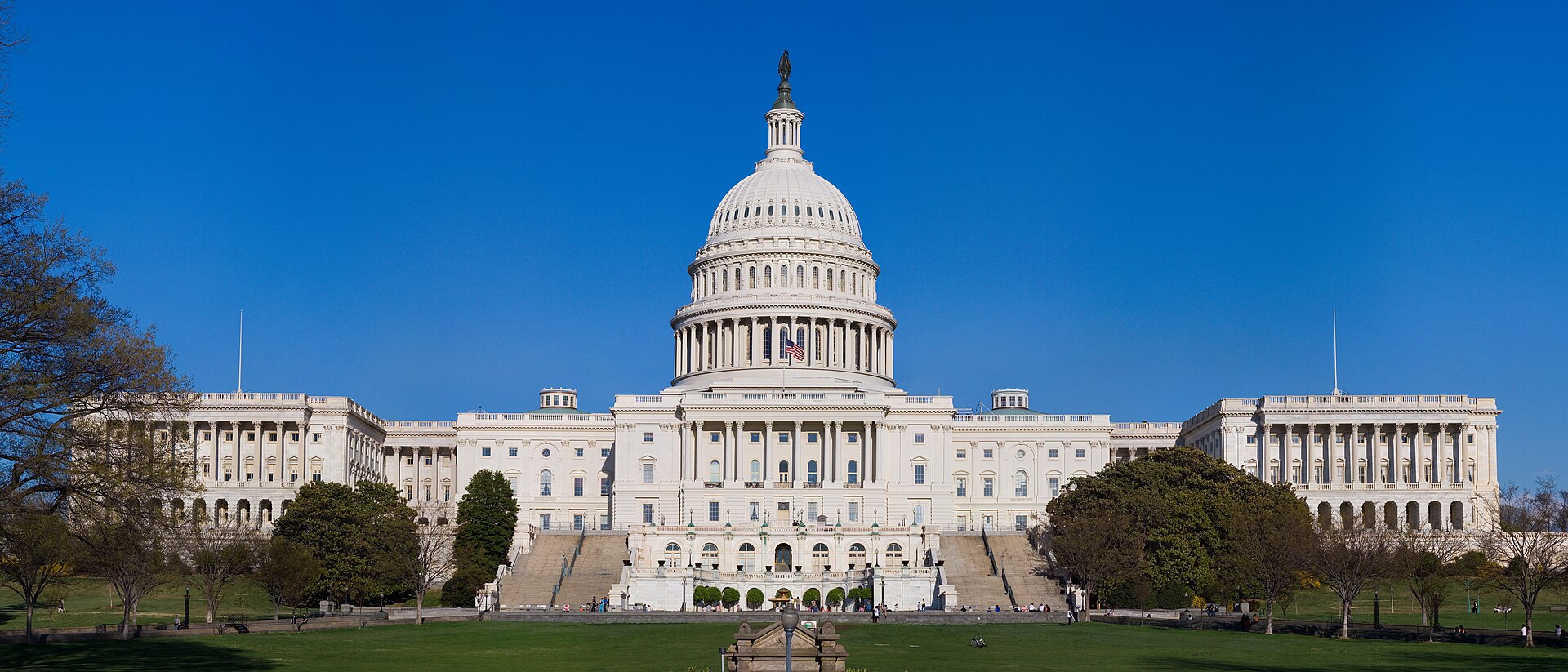


BAAJA, the Bipartisan American Affordability and Jobs Act of 2026, passed the US Senate by 62 votes to 33 last week. The bill would overhaul how federal agencies permit energy projects, transmission lines and other infrastructure, and it would give developers something they have never had: a route to sue agencies that treat their type of project unfairly. The Senate passed it as an amendment to H.R. 2347, a tax bill the House had already approved, so the text now returns to the House.
For developers and lenders, the bill changes three things that drive project risk: how long a project can be challenged in court, whether an issued permit can be taken away, and what happens when an agency delays.
How BAAJA changes legal risk
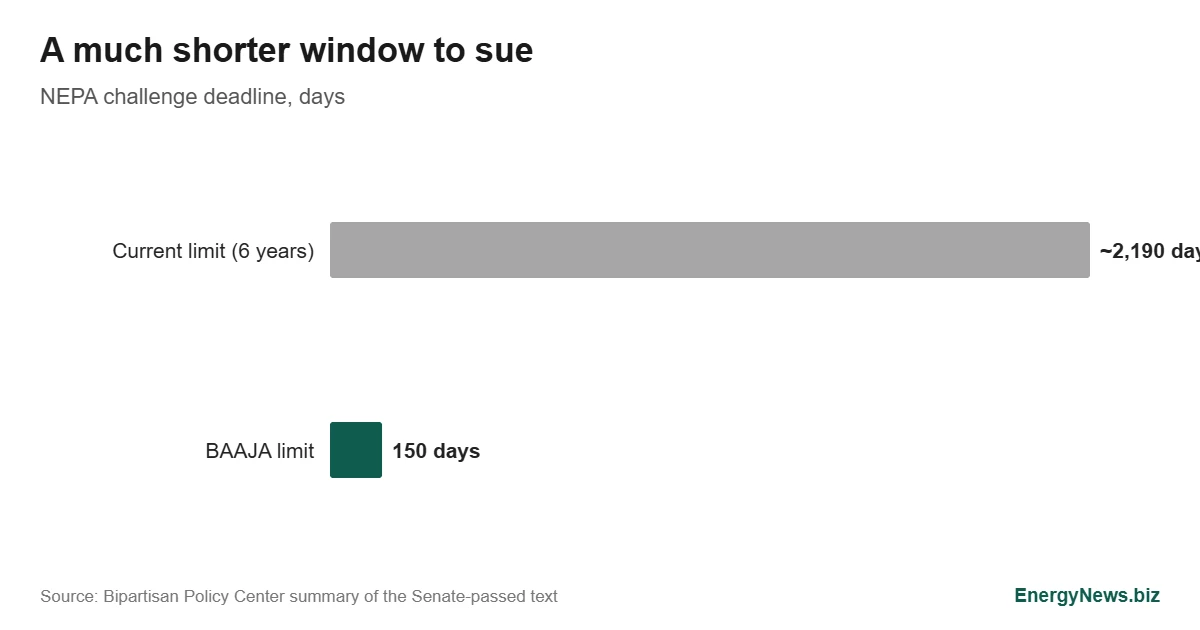
According to a section-by-section summary by the Bipartisan Policy Center, the bill cuts the time to challenge a project under the National Environmental Policy Act from six years to 150 days. A calculation shows the scale: six years is roughly 2,190 days, so the window shrinks by about 93%. Courts that found a NEPA violation could only send the decision back to the agency, not void the permit or stop the project, and the agency would have no more than 180 days to fix it.
Section 1401 would bar agencies from revoking, suspending or materially amending a permit in effect on or after 6 November 2026, with six exceptions including court orders, fraud and urgent harm. Where bad-faith interference is proven, sponsors could recover 25% to 50% of development and construction costs from the federal Judgment Fund.
The right to sue in BAAJA
Section 1402 is the most novel part. Sponsors of 46 listed project types, including solar, storage, nuclear and transmission, could sue over a permit denied in bad faith or delayed more than 60 days past a deadline, as part of a pattern of disparate treatment. Plaintiffs would need statistical evidence comparing their treatment against the previous ten years. Damages would range from 50% to 100% of a project’s reasonably expected construction cost.
A calculation makes that concrete. For a 200 MW solar plant costing about $1 per watt to build, or $200 million, a successful claim would be worth between $100 million and $200 million. That is large enough to change how agencies handle deadlines, and large enough that lenders will start to price it into risk assessments.
Grids, storage and data centres
The bill’s transmission title would require the Federal Energy Regulatory Commission to issue permits for qualifying lines, including those of 230 kV or more, once a state has had a year to act. Reconductoring, voltage upgrades and energy storage within existing rights of way would be exempt from NEPA and historic preservation review, a fast lane for the kind of grid work set out in the analysis of grid expansion needs. Behind-the-meter batteries could be aggregated into wholesale markets within 18 months, and FERC would have 90 days to ensure data centres pay their share of grid costs.
The Solar Energy Industries Association says the bill could add 167 GW of additional solar between 2028 and 2035. The Sierra Club opposes it, arguing that it removes the power of courts to act on legal violations. Both points will shape the House debate.
Who wins and who worries under BAAJA
For developers of solar, storage and transmission, BAAJA would turn permitting from an open-ended legal risk into a bounded one. A project that clears its 150-day challenge window would be far harder to stop later, which lowers the risk premium lenders charge and can shorten the time from permit to financial close. Transmission developers gain most from the FERC backstop, because interregional lines have been stuck for years in state-by-state approvals.
Opponents worry that the same certainty limits the ability of communities and courts to correct real mistakes. The House can amend the text, and any final version will depend on how far negotiators are willing to narrow the damages provisions. Under BAAJA as passed, agencies would face a strong financial incentive to meet deadlines, which is the core change developers have asked for.
What developers should do now
Developers with projects in federal review should document deadlines and agency correspondence now, because any future claim depends on evidence of delay and comparison with other project types. The next step is the House vote on the amended H.R. 2347. The text can be followed on Congress.gov.
Add EnergyNews.biz as a preferred source on Google


