




Alby PtX has selected Siemens Energy to supply about 200 MW of PEM electrolysis for its planned synthetic sustainable aviation fuel plant in Alby, in the municipality of Ånge in central Sweden. The agreement starts with a basic engineering package, and the equipment order depends on a final investment decision, which the developer targets for 2028, according to Hydrocarbon Processing.
With this step, Alby PtX has its core partners in place. Técnicas Reunidas is the front end engineering partner, while Topsoe and Sasol provide fuel synthesis technology. The plant is designed to produce up to 66,000 tonnes of e-SAF a year from 2031.
Alby PtX in hydrogen terms
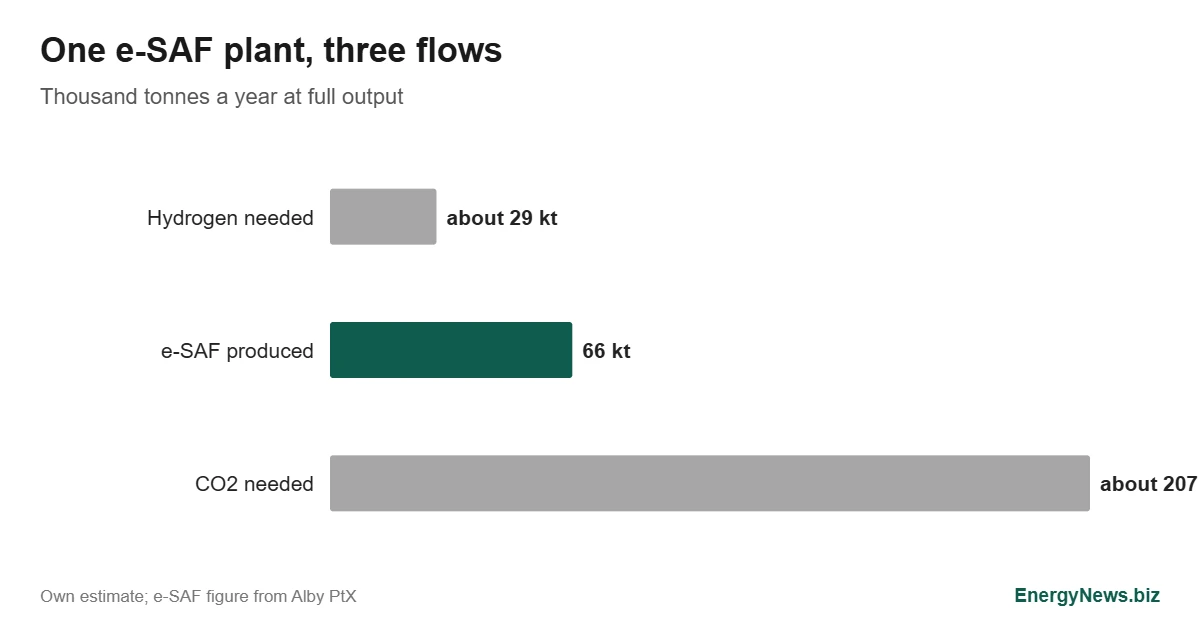
Siemens Energy will supply its Elyzer P-300 technology. A 200 MW electrolyser running about 8,000 hours a year at around 55 kWh per kilogram would produce roughly 29,000 tonnes of hydrogen. Set against 66,000 tonnes of fuel, that suggests about 0.44 tonnes of hydrogen for each tonne of e-SAF, which fits the chemistry of turning hydrogen and carbon into long hydrocarbon chains.
Put another way, Alby PtX plans about 330 tonnes of e-SAF a year for each megawatt of electrolysis. That ratio is a useful yardstick for buyers comparing other e-fuel projects, many of which publish capacity in megawatts but not output in tonnes.
The electricity bill is the other side of the equation. At 8,000 hours, 200 MW of electrolysis uses about 1.6 TWh of power a year, before the energy needed for fuel synthesis and carbon capture. That is why the location matters. Central Sweden has some of the lowest power prices in Europe, thanks to hydropower and a strong grid, but prices in the northern price zones have also become more volatile as new industry arrives. A long power purchase agreement will be as important for Alby PtX as the electrolyser contract itself.
The carbon side
Every tonne of synthetic jet fuel also needs carbon. Based on the chemistry of kerosene-type hydrocarbons, each tonne of fuel carries about 3.1 tonnes of CO2. At full output, Alby PtX would therefore need on the order of 200,000 tonnes of CO2 a year. Under EU rules, that carbon has to come from biogenic or other eligible sources, which is one reason Swedish sites near pulp and biomass plants attract e-fuel developers.
Securing that carbon under long contracts is as much a part of the business case as power. A plant that runs short of eligible CO2 cannot make certified fuel, however cheap its hydrogen.
Set against the EU mandate
From 2030, EU rules require 1.2% of aviation fuel at EU airports to be synthetic. A recent Madrid to Lisbon flight showed what that blend looks like in practice. Dividing 66,000 tonnes by 1.2% gives about 5.5 million tonnes. In other words, Alby PtX alone could cover the 2030 synthetic share for an aviation market burning about 5.5 million tonnes of jet fuel a year, roughly the size of a large national market in Europe.
The timing risk
The plan has a long road ahead. A final investment decision in 2028 and production from 2031 leaves about three years for construction and commissioning. Electrolyser makers have struggled with first projects at this scale: thyssenkrupp nucera has just reported a €136 million loss linked partly to commissioning costs. Buyers signing offtake contracts with Alby PtX should check delivery guarantees as closely as price.
The number to watch
The number to watch is the offtake volume Alby PtX signs before its 2028 decision. Airlines and fuel suppliers committing to a large share of the 66,000 tonnes would make financing possible. Without long contracts, even a well-engineered plant is unlikely to reach a final investment decision on time.
Add EnergyNews.biz as a preferred source on Google


