


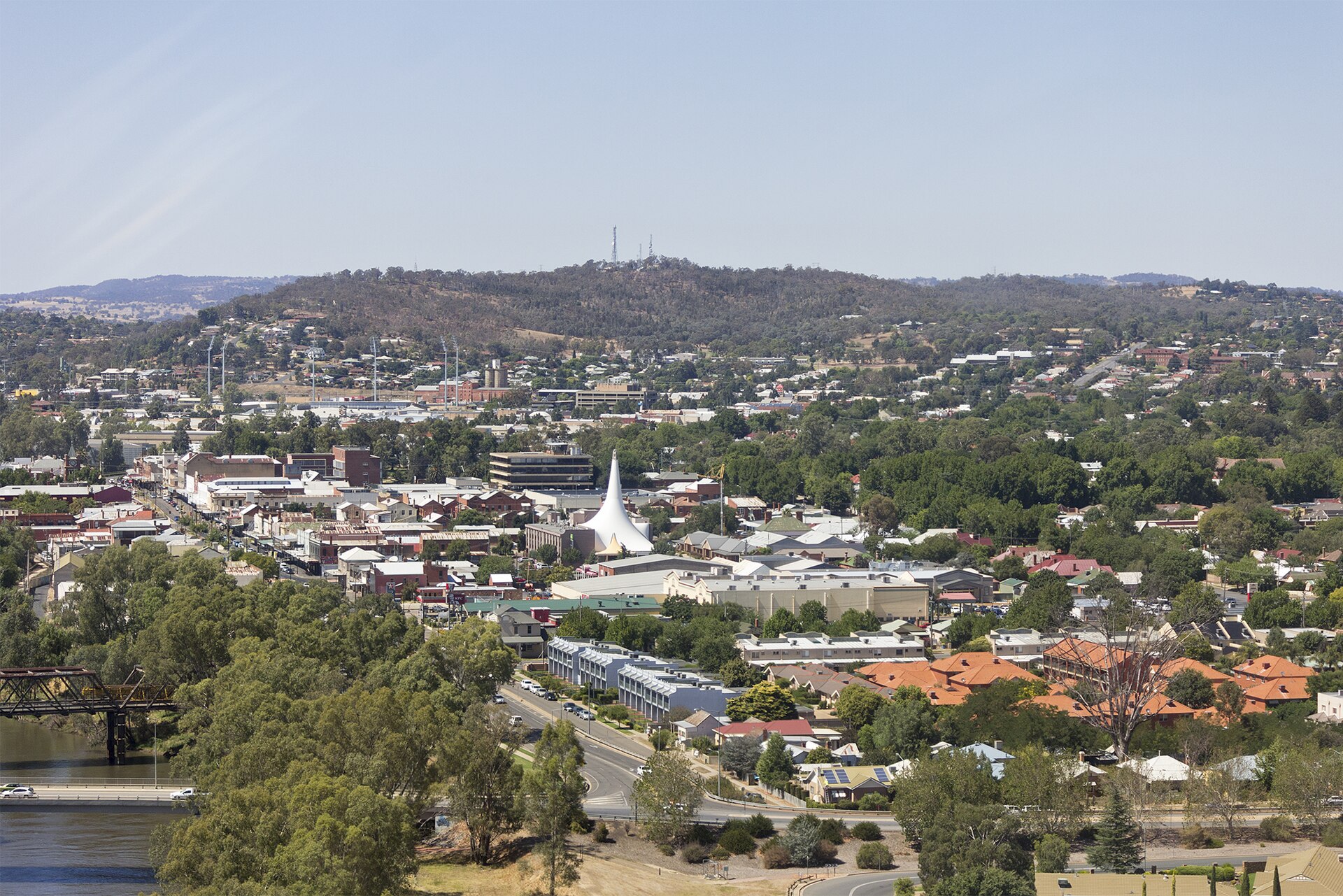


Neoen has submitted the Livingstone solar farm and battery near Wagga Wagga in southern New South Wales for federal environmental approval. The project combines 300 to 600 MW of solar with a battery of up to 400 MW and 1,600 MWh, according to RenewEconomy. Public comment is open for two weeks.
The Livingstone solar project would connect to Transgrid’s proposed Gugaa substation on HumeLink, the new 500 kV line that runs parallel to the existing 330 kV Wagga to Lower Tumut line. The substation would be built in the northern part of the project area.
Livingstone solar output and battery shift
Neoen has not published expected output. The calculation below assumes a 24% capacity factor for single-axis tracking solar in southern NSW and a battery round-trip efficiency of 85%.
- 600 MW of solar at 24% produces about 1,260 GWh a year.
- A 1,600 MWh battery cycling once a day delivers about 496 GWh a year after losses.
- That is about 39% of the solar output moved from midday to the evening peak.
The four-hour battery at 400 MW is two thirds of the solar capacity in power terms. That ratio is higher than at most solar farms built in Australia before 2024, which often had no storage at all. It reflects how far midday prices have fallen in the National Electricity Market and how much of a solar farm’s value now depends on selling power after sunset.
Land use: 4.8 ha per MW, with farming continuing
The project area covers about 2,900 hectares near Big Springs and Gregadoo, currently used mostly for grazing. At 600 MW, that is about 4.8 hectares per MW, more than double a typical utility solar footprint. RenewEconomy notes that this is the potential development envelope and that future planning is likely to reduce it. Neoen also expects farming to continue under the panels, which it describes as the implementation of agrisolar.
The site is not in a Renewable Energy Zone. Its advantage is a direct connection to HumeLink, one of the main new transmission projects in the NEM, which links Snowy 2.0 and southern NSW to Sydney.
How Livingstone compares with Neoen’s other hybrids
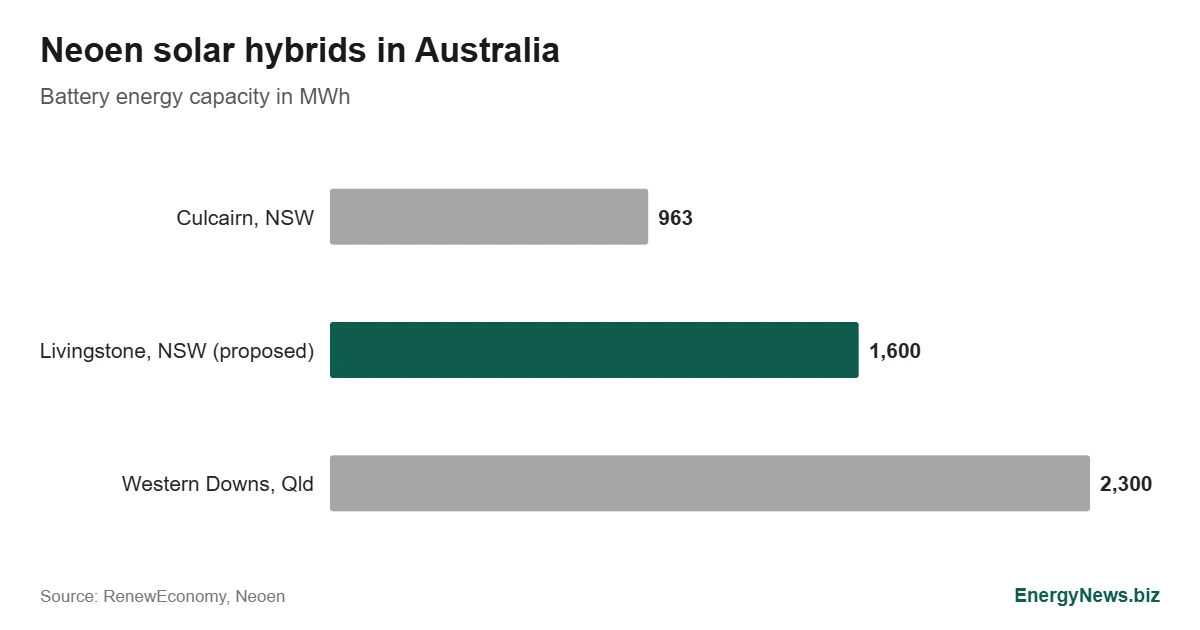
Neoen, owned by Brookfield, has 5 GW in operation or under construction in Australia and targets 20 GW of renewable generation by 2030. Its Culcairn project, also in southern NSW, pairs 440 MW of solar with a 215 MW, 963 MWh battery. The Western Downs Green Power Hub in Queensland combines 460 MW of solar with 845 MW and 2,300 MWh of storage. The Livingstone solar hybrid sits between the two in battery size.
The wider market shows why developers keep adding storage. Nine large batteries with 7.1 GWh of storage switched on in the first half of 2026, more than in all of 2025, according to the Clean Energy Council as reported by The New Daily. Neighbouring projects are moving the same way; EDF recently bought a 250 MW battery near Armidale.
Timeline
Construction is expected to start in 2030, once approvals are secured, and take 12 to 14 months. That timing depends on HumeLink and the Gugaa substation, as well as state planning approval. The project’s final size, between 300 and 600 MW of solar, will likely depend on connection capacity offered at Gugaa.
What to watch
Watch the size Neoen settles on when it files for state planning consent. A final design closer to 600 MW of solar with the full 1,600 MWh battery would make Livingstone solar one of the largest hybrids in NSW and a test of how much generation HumeLink’s new substations can absorb.
Add EnergyNews.biz as a preferred source on Google


