


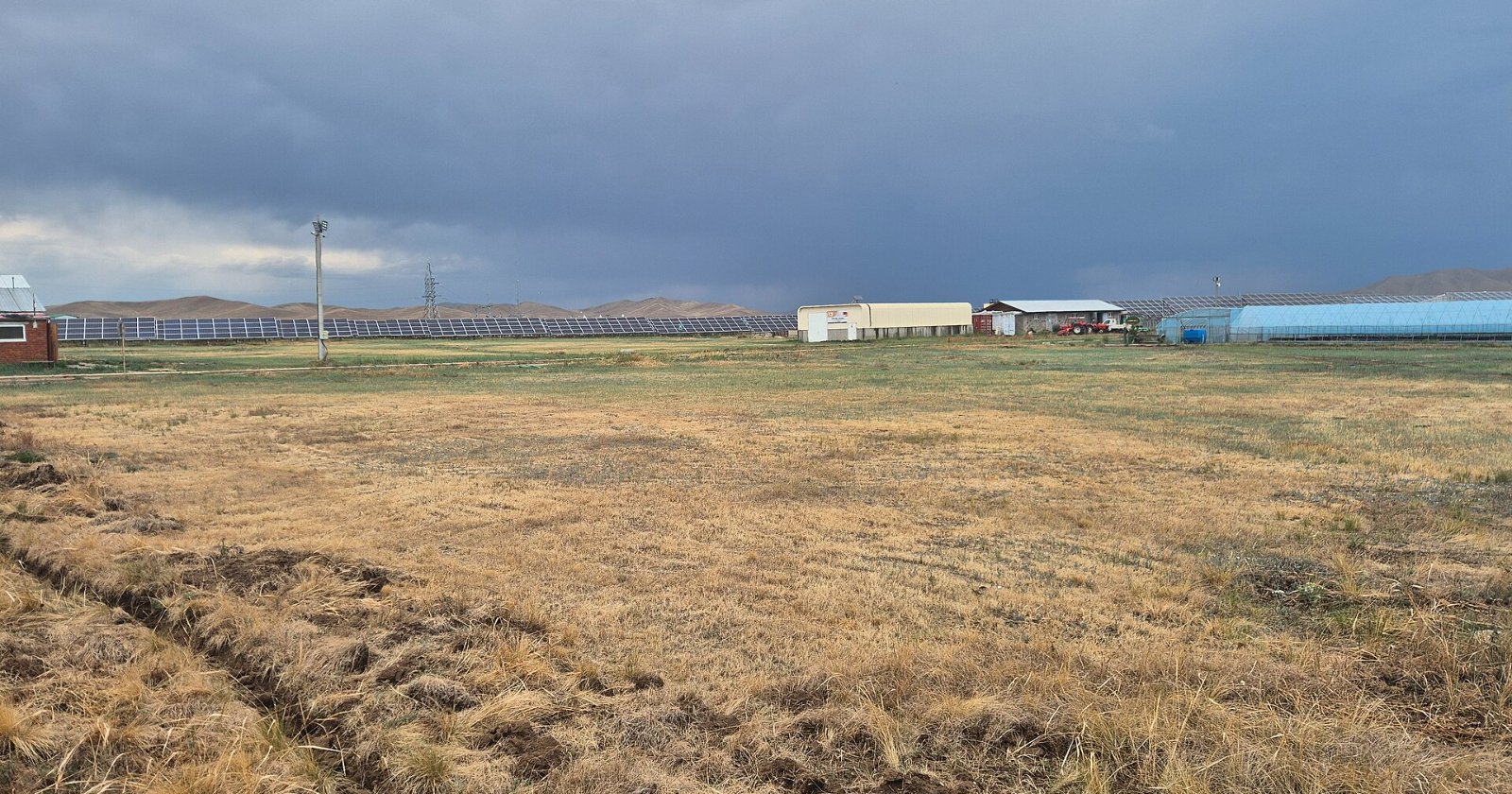


Toshiba will pair a 2 MW and 667 kWh SCiB battery with a 2 MW and 15.33 MWh capacity type battery system at the Darkhan substation microgrid in northern Mongolia, giving the same inverter rating two very different durations of 20 minutes and 7.66 hours. Operation is scheduled for December 2027, and Toshiba has begun manufacturing the power type system.
Two batteries, one 10 MW solar plant
Both systems connect to a 10 MW solar plant. The SCiB battery is a power type unit with a 3C rate, meant for high frequency control of solar ramps, the fast swings in output when cloud cover changes. The capacity type system, at 15.33 MWh, is meant for peak shifting and supply and demand balancing over hours. The customer is National Power Transmission Grid, the state owned transmission operator, and the project is funded by a Japanese government grant aid package.
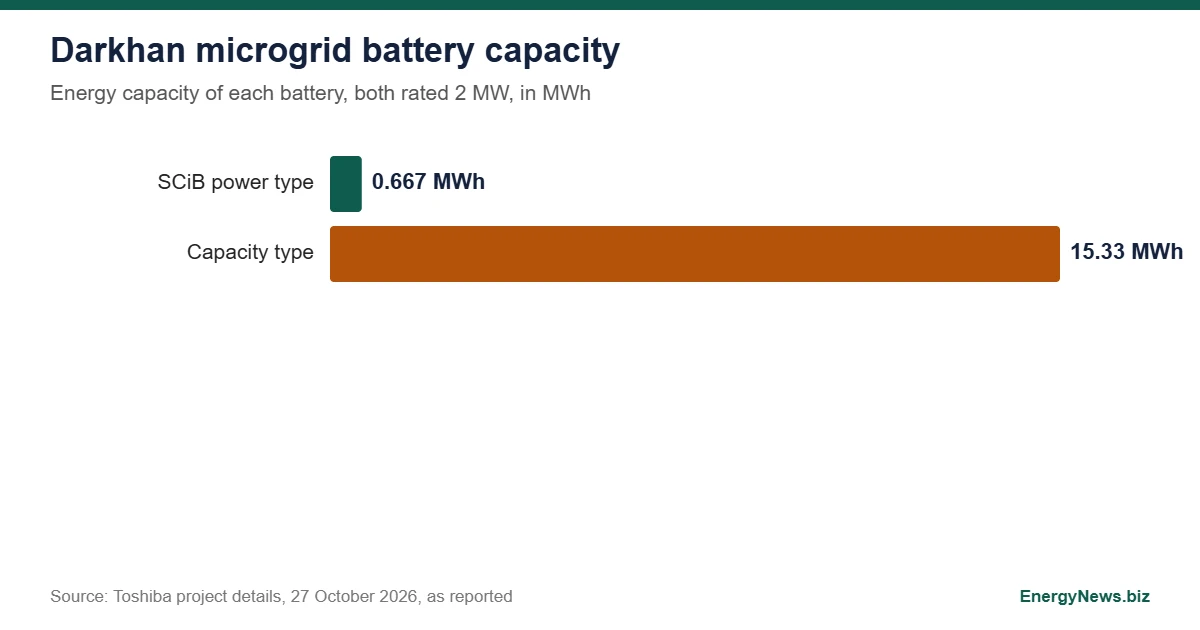
The split reflects a design choice: use a long duration battery for energy and a short duration, high cycle battery for power. The SCiB battery uses a lithium titanate oxide anode, a chemistry known for fast charging and high cycle capability, which suits ramp control that would wear a conventional energy cell faster. The capacity type system does not appear to be a Toshiba product, and its supplier and chemistry have not been named in the information available to us.
Control, monitoring and the Mongolian target
Toshiba’s energy management system will forecast solar generation and power demand and coordinate both batteries. It allows remote monitoring and control from the transmission operator’s headquarters and its Darkhan branch. In a small grid, that forecasting layer decides whether the SCiB battery and the long duration system complement each other or compete for the same cycles.
Mongolia aims to raise renewables to 30% of total installed generation capacity by 2030. A 10 MW solar plant with 2 MW of power rated storage is small against that goal, so the Darkhan project should be read as a test of a configuration that could be repeated at other substations, not as a source of national capacity. The SCiB battery stores less than 5% of the energy of its capacity type partner, since 0.667 MWh is about 4.3% of 15.33 MWh, yet it carries the same 2 MW rating and the fast response duty.
What to watch for the SCiB battery in Mongolia
Three details will decide whether the design works. First, how the control system allocates cycles between the two batteries, since the SCiB battery can absorb many more cycles than the energy system. Second, the cost of the combined package, which the announcement does not disclose. Third, whether the grant aid model that funds Darkhan can be extended to further sites. Until Toshiba or the operator publishes performance data after the 2027 start, the case for pairing a short duration SCiB battery with a long duration system rests on design logic rather than operating results. See also our report on Singapore’s storage target. Product information is available from Toshiba.
Add EnergyNews.biz as a preferred source on Google


