


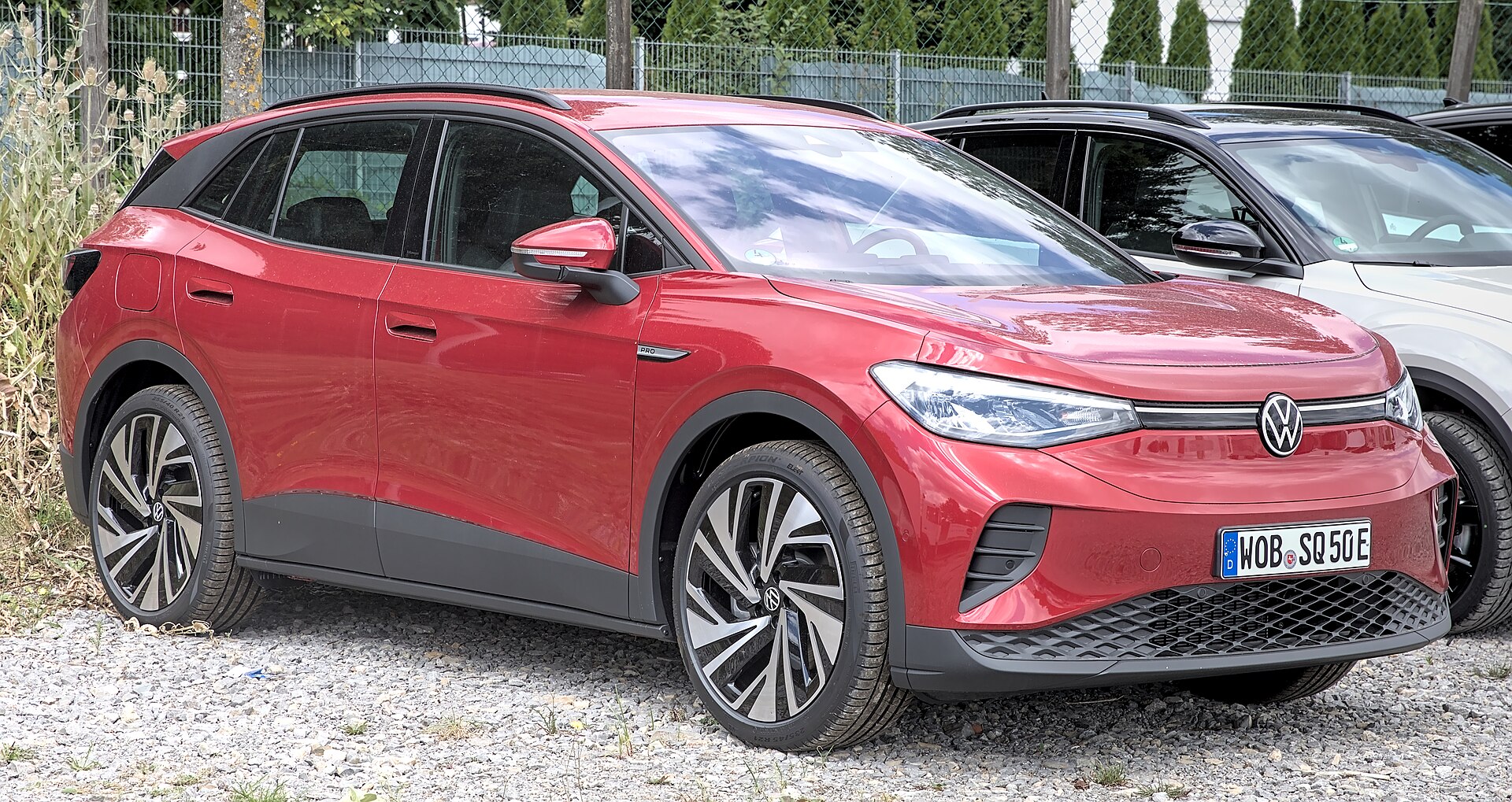


The ID.4 recall covers 22,524 Volkswagen electric crossovers in the United States, and the instruction to owners is to stop charging at 80 percent until a repair exists. Volkswagen’s safety report to the National Highway Traffic Safety Administration says certain charging profiles combined with a state of charge above 80 percent may trigger thermal propagation inside the high voltage battery, which can lead to a vehicle fire. The company states that the root cause is unknown.
What the filing says
| Item | Detail |
|---|---|
| Recall numbers | NHTSA 26V-630, Volkswagen 93EX |
| Vehicles | 22,524 ID.4 vehicles, model years 2023 to 2026, built from 1 January 2023 to 1 February 2025 |
| Component | Three high voltage battery part numbers |
| Interim instruction | Limit charging to 80 percent until the remedy is performed |
| Claims cited | 22 or 23 in the United States between January 2024 and August 2026, depending on the report |
| Compensation | No reimbursement plan, because the vehicles are within the new vehicle limited warranty |
| Owner letters | Expected to begin in November |
Volkswagen began reviewing high voltage battery thermal events in the field in June 2026, and on 17 June preliminary data pointed to a possible influence from specific isolation resistance values and DC charging ratios. Its product safety committee then ordered a field study of complete battery systems from vehicles not covered by earlier battery recalls, and the company identified the overheating batteries in September. The recall report is dated 30 September 2026, and the affected vehicle numbers became searchable on the NHTSA website in October.
Thermal propagation is a chain reaction in a battery in which a rise in temperature in one place triggers more heat and current, leading to extreme temperatures that can spread to neighbouring cells. Volkswagen describes the resulting risk as a possible vehicle fire that could increase the risk of injury.
How rare, and how it will be handled
Volkswagen estimates that about 0.1 percent of the recalled vehicles carry the defect. The arithmetic is consistent: 22 claims over 22,524 vehicles is 0.098 percent, one in about 1,000, and 23 claims is 0.102 percent. The filing does not say how many claims involved an actual fire, so the claim count measures reports, not confirmed incidents. The reports differ by one claim, 22 in one summary of the filing and 23 in another, a discrepancy that the primary document would resolve.
The interim measures act on the condition the company has identified. Owners receive warning stickers reminding them not to charge past 80 percent, and depending on vehicle configuration and online connectivity, some vehicles may be set to cap the maximum state of charge at 80 percent automatically. A software cap, which would not need a part replacement, is the kind of measure that can reach many vehicles quickly, while a permanent repair for the battery itself has no announced design or date.
What the 80 percent limit tells owners and fleets
An 80 percent limit takes away a fifth of the charge that would otherwise be available. For an owner who charges at home and drives short distances, the day to day effect may be small, while for long distance driving the limit means more frequent stops. The reports reviewed do not say whether the limit applies to DC fast charging differently from AC charging, although the filing’s reference to charging profiles and DC charging ratios suggests that charging style is part of the investigation.
The ID.4 has had high voltage battery recalls before, and the company is applying this one to vehicles outside those earlier campaigns, which is why its field study used batteries from vehicles not previously covered. That approach suggests Volkswagen is mapping the problem by examining complete systems rather than assuming it is confined to one production batch.
Dates and open questions
Three items remain open: the root cause, the design of the permanent remedy and the date it will be available. The dated checks are the owner letters from November and any amended filing that adds the cause or the repair. Owners can check their vehicle identification number on the NHTSA recall website. For another battery safety question treated with data, see the 1:20 test of hydrogen leaks in a refuelling area. Sources: Volkswagen’s safety recall report to NHTSA, recall 26V-630, as reported on 14 October 2026 and in earlier summaries of the filing.
Add EnergyNews.biz as a preferred source on Google


