


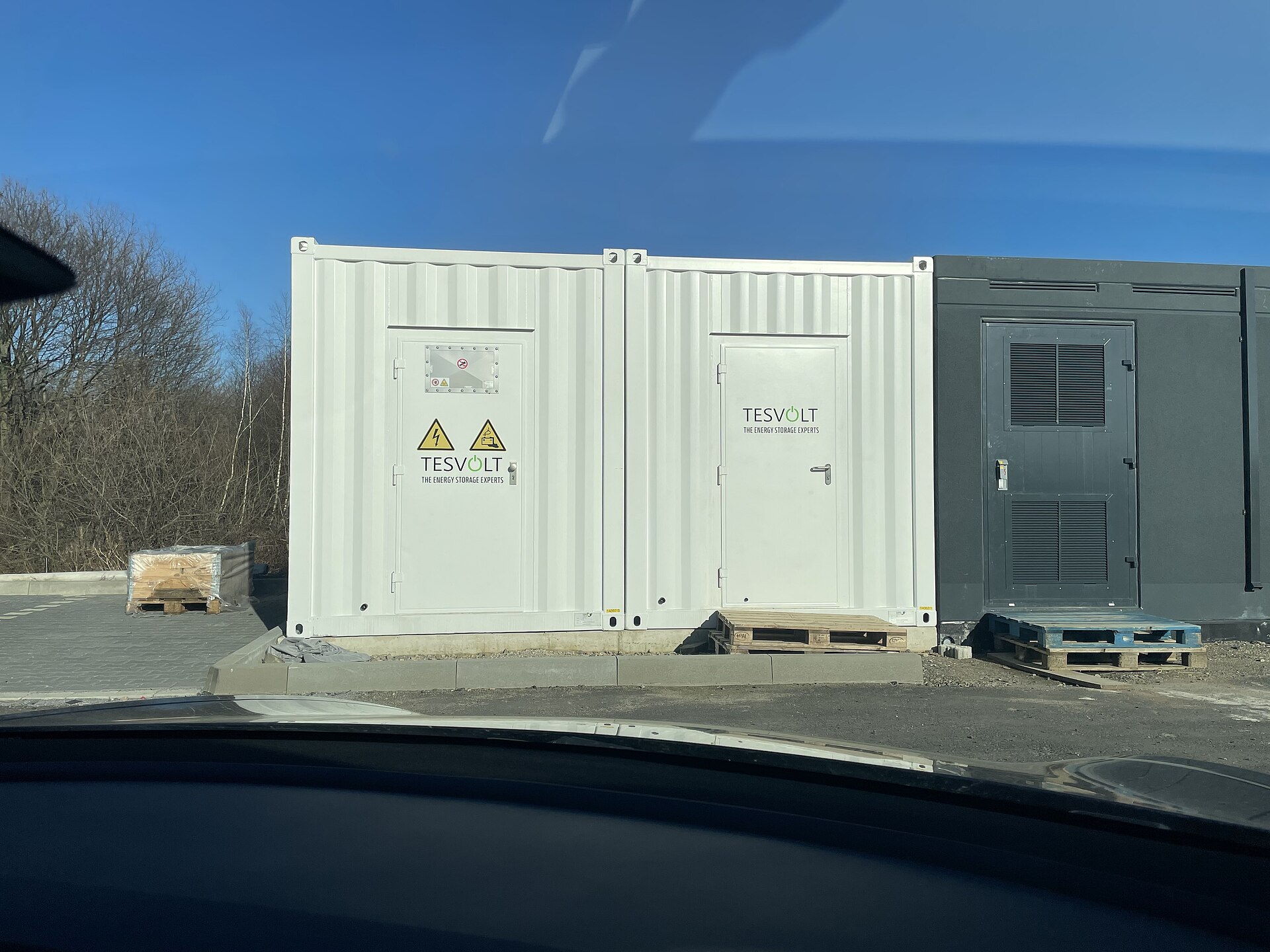


Germany BESS developers are racing the calendar. Large battery projects must reach a final investment decision by 31 December 2026 to qualify for an exemption from grid fees, provided they then come online by 4 August 2029. FID in this context means binding orders for 50% of the total investment. The exemption is widely seen as critical to the business case, and the past week shows how hard developers are pushing to meet it.
Six companies announced progress on projects in a single week: Elements Green, Voltwise Power, EnBW, Green Flexibility, Flower and Dispatch.
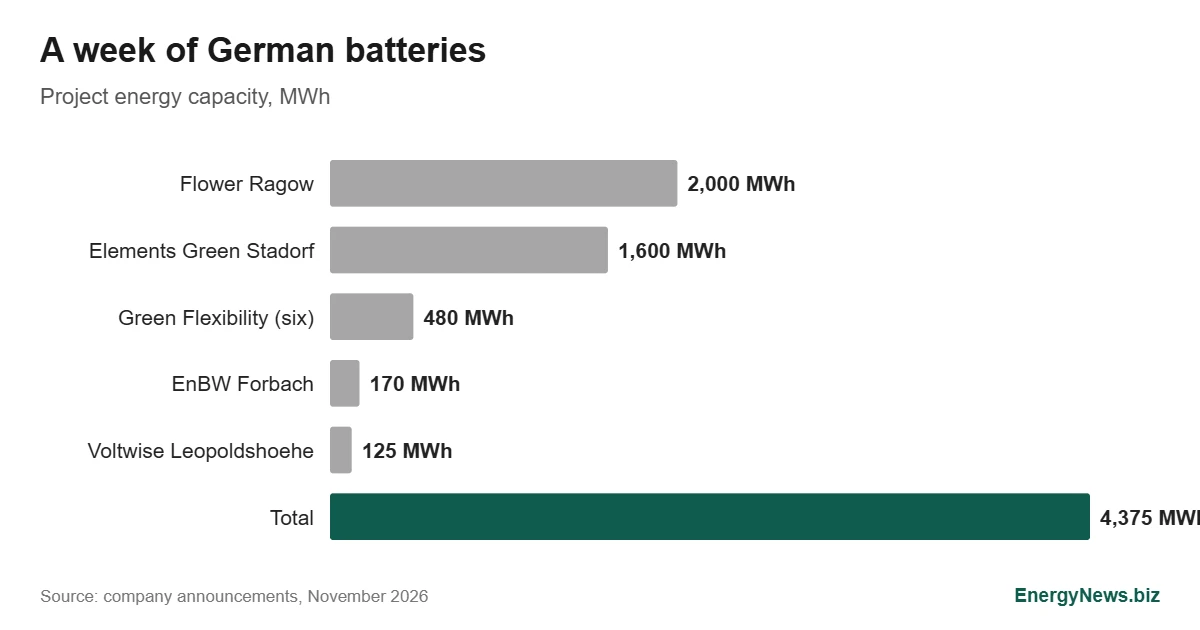
The Germany BESS projects in numbers
Elements Green signed a grid connection agreement with TenneT for a 400 MW, 1,600 MWh system in Stadorf, Lower Saxony. Voltwise broke ground on a 56 MW, 125 MWh project in Leopoldshöhe, North Rhine-Westphalia, using Fluence technology. EnBW took FID on a 41 MW, 170 MWh battery at its Forbach site. Green Flexibility started construction on the first of six Lower Saxony projects totalling 125 MW and 480 MWh, a €150 million programme. Flower applied for building permits for a 500 MW, 2,000 MWh system called Ragow.
A calculation across these announcements gives about 1,122 MW and 4,375 MWh, so the average duration is close to four hours. That is a clear shift from the one to two hour systems that dominated early German projects, and it reflects a market moving from fast frequency services towards energy shifting, where longer duration earns more from daily price spreads.
Why the Germany BESS deadline matters
Grid fees can make or break a storage project, because a battery both draws from and feeds into the grid and could otherwise pay twice. The exemption removes that cost for qualifying projects. Missing the deadline means a project must find another way to make the numbers work, which is why developers are rushing orders and financing.
The rush has a side effect: grid access. German system operators increasingly offer flexible connection agreements, which give limited or conditional access in exchange for a faster connection. These terms restrict when a battery can charge or discharge, and so change revenue. The Elements Green agreement with TenneT most likely follows this model. Price signals such as German imbalance prices remain the main revenue driver once the projects are running.
Germany BESS suppliers and finance
The rush also tests the supply chain. Integrators such as Fluence and Chinese system suppliers are competing for German orders, and banks such as Santander are arranging project finance on the back of route-to-market contracts with utilities like Vattenfall. A tight deadline favours suppliers with stock and standard designs, because there is little time for custom engineering.
For Germany BESS developers, the trade-off is speed against terms. Signing binding orders for half the investment before the end of the year locks in equipment prices and delivery slots, but it also commits capital before every grid detail is settled. Developers that already hold connection agreements are in the strongest position, and they are the ones most likely to announce investment decisions in December.
What to watch in Germany
Not every project in the pipeline will make the deadline. Ragow, for example, targets ready to build in 2027 and commercial operation in 2029, so its timing depends on how the rules are applied. The key figure in January will be how many megawatt hours actually reached FID by 31 December, compared with the gigawatt hours announced. A gap between the two would signal that grid access, not capital, is the real constraint, which echoes the European push for faster permitting deadlines.
Project details are published by the developers, including EnBW.
Add EnergyNews.biz as a preferred source on Google


