


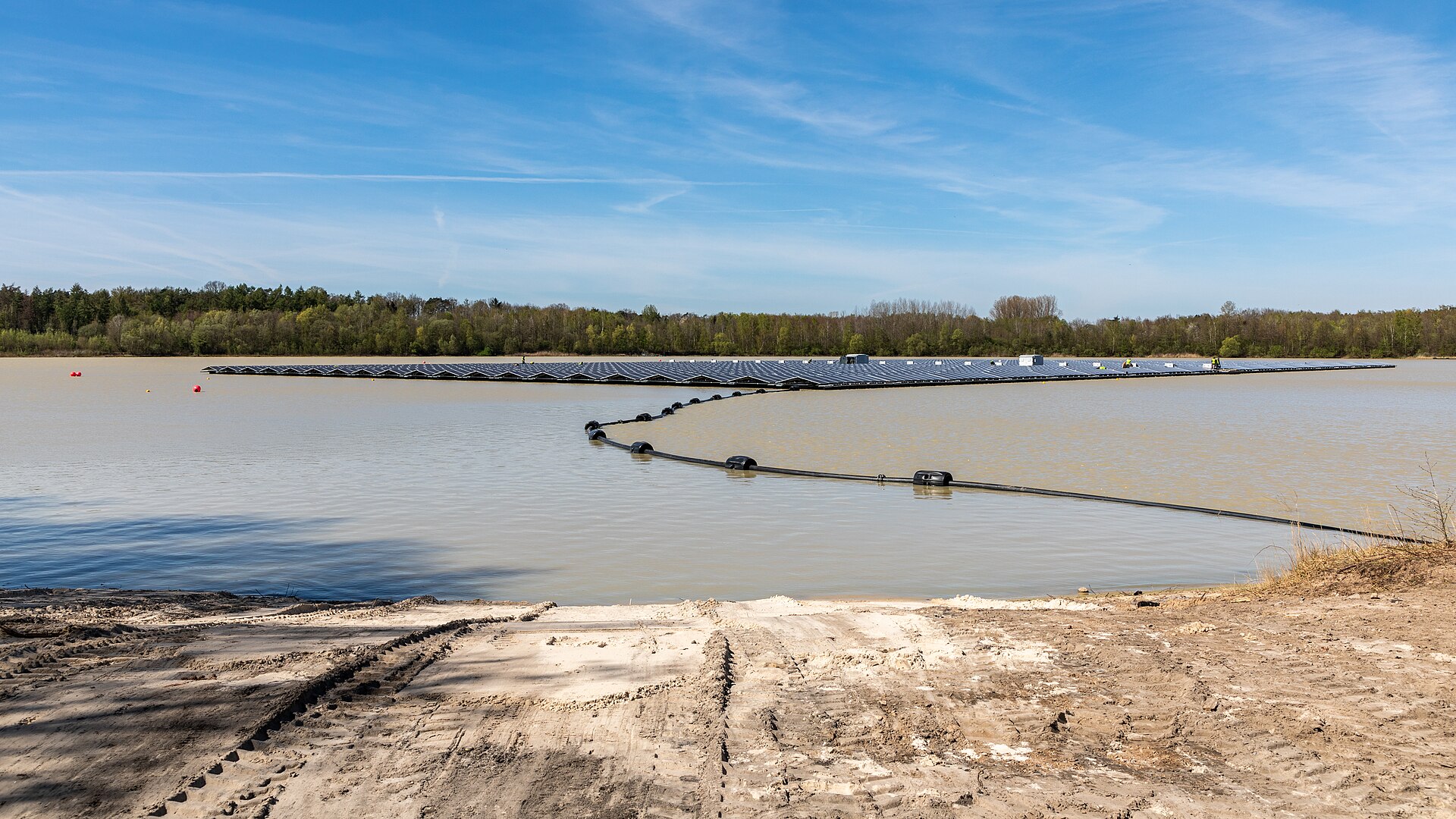


Kyrgyzstan is preparing its first utility-scale floating solar power plant. The Asian Development Bank is providing $20 million for a 15 MW project on the reservoir of Hydropower Plant No. 5, about 10 kilometres northeast of Bishkek, according to pv magazine. The financing package consists of a $19.55 million concessional loan and a $450,000 grant.
The plant will be built next to a 100 kW floating solar pilot that has operated on the same reservoir since 1 March 2024. The state-owned company Chakan GES built the pilot with an ADB grant, and the new project is being developed under a cooperation agreement between the two.
Floating solar costs and output
The ADB describes the plant as 15 MWac, or about 18 MWp of panels, with expected output of around 20 GWh a year. Those figures give a capacity factor of about 15% on the AC rating, which is typical for a site at this latitude with cold winters.
Cold water and air also help. Solar panels lose efficiency as they heat up, and panels floating on a mountain reservoir run cooler than panels on dry land in summer. Studies of floating solar in other markets have found small output gains from this cooling effect, although the exact figure depends on design and climate. Winter is the harder season: shorter days, snow and possible ice on the reservoir surface all need to be considered in the design, which is one reason the ADB has funded a climate and disaster risk assessment for the site.
The financing works out at about $1.33 million per MWac, or roughly $1.1 million per MWp. That is higher than large ground-mounted projects in sunnier markets, but floating solar needs pontoons, anchoring and marine-grade cabling. It also includes support for project management and institutional capacity. For comparison, a 50 MW ground-mounted plant in Zambia reached financial close this month at about $1.2 million per MW.
Why Kyrgyzstan needs floating solar
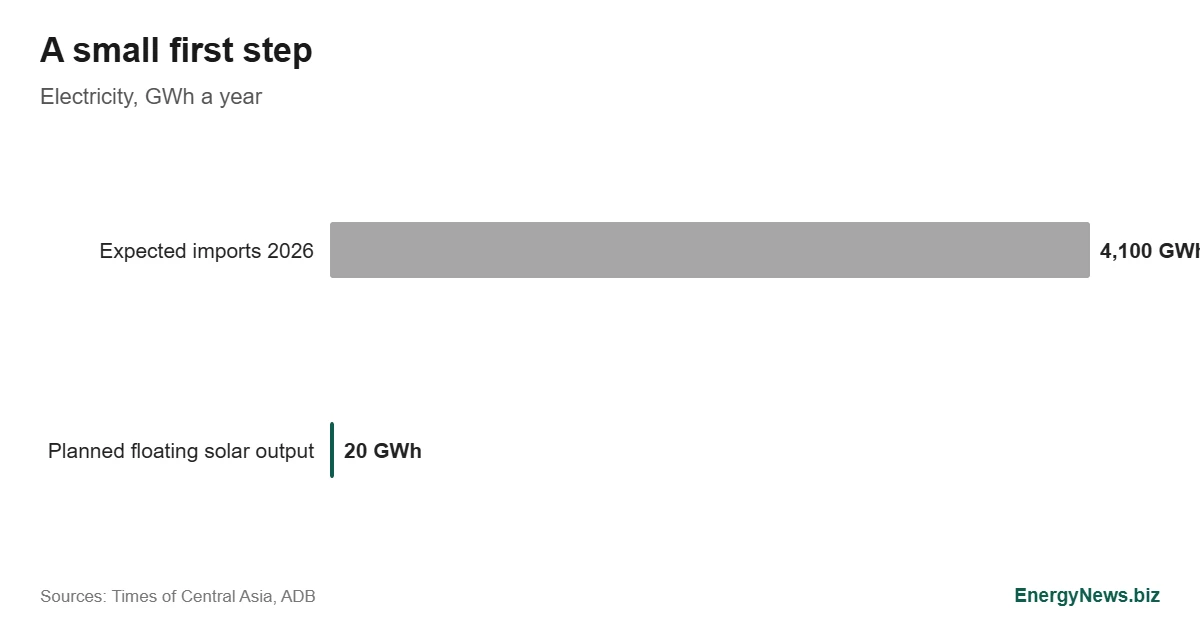
Kyrgyzstan relies heavily on hydropower, which leaves supply exposed when reservoir levels are low. The country expects to import about 4.1 billion kWh of electricity in 2026, around one fifth of projected consumption of 19.6 billion kWh. Officials have warned of possible shortages at peak demand this winter.
The new plant’s 20 GWh a year is only about 0.5% of expected imports. Its value lies elsewhere. Floating solar on hydropower reservoirs uses existing grid connections and land the country already controls. Panels also reduce evaporation from the water surface. Solar output peaks in summer, when water can be saved in the reservoir for winter, when demand and imports are highest.
That seasonal swap is the real logic of floating solar in hydro-dependent countries. Each kilowatt hour produced by the panels in summer is water that stays behind the dam. Released in winter, that water produces power when imports are most expensive and supply is tightest. The pilot has given Chakan GES almost three years of operating data to test this approach, including how the floats behave in winter conditions.
A model for the region
The ADB wants the project to serve as a template. It plans knowledge sharing with Tajikistan and Azerbaijan, which also have large reservoirs. Earlier ADB technical assistance looked at floating solar options in Afghanistan, Azerbaijan and Kyrgyzstan, including the large Toktogul reservoir.
If the HPP-5 floating solar plant performs well, the next step would be much larger arrays on reservoirs such as Toktogul, where hundreds of megawatts could be possible. The financing has been proposed but not yet formally approved by the bank’s board.
What to watch
The key figure is the tender price for construction once the ADB approves the loan. A bid well below $1.33 million per MW would show that floating solar can compete with imported power in Central Asia, and make larger projects easier to finance.
Add EnergyNews.biz as a preferred source on Google


