


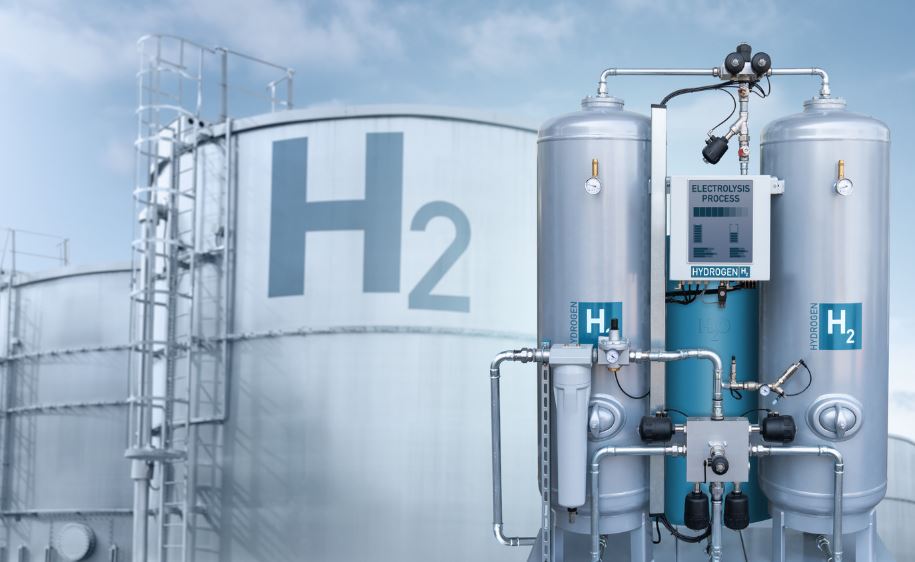


The expenses of producing green hydrogen via electrolysis at sea can be decreased by distilling Ultra Pure Water (UPW) on site, according to Wageningen University & Research.
Ultra-clean water is needed to convert wind into green hydrogen. Next, suitable partners will test this concept on a larger scale (0.5-1 MW) offshore.
Researchers demonstrated on Texel how to create ultra-pure water from seawater using residual heat from electrolysis (for hydrogen production).
Membrane distillation to produce clean seawater isn’t new. WUR claims the technique involves a lot of heat and energy, therefore it’s not the greatest for many applications.
To run smoothly, the electrolyzer’s heat must be swiftly removed. By employing this heat for membrane distillation, saltwater cooling is no longer needed and ultra-pure electrolyzer feed water is produced immediately.
Ultra Pure Water costs less than reverse osmosis, which reduces the hydrogen system’s electrical efficiency. Reverse osmosis uses electricity.
The main result of the research is a functioning proof of the technological principle, demonstrated on the quay of Seaport Texel.
An economic examination demonstrates that residual heat-produced water has significant benefits. One-third of generated water is used to make hydrogen. Two-thirds of the produced water is available. This exceptionally pure water is useful for areas/periods with water scarcity, offshore, drinking water, and industrial applications, according to WUR.
Add EnergyNews.biz as a preferred source on Google


